RBT® Training Course Options
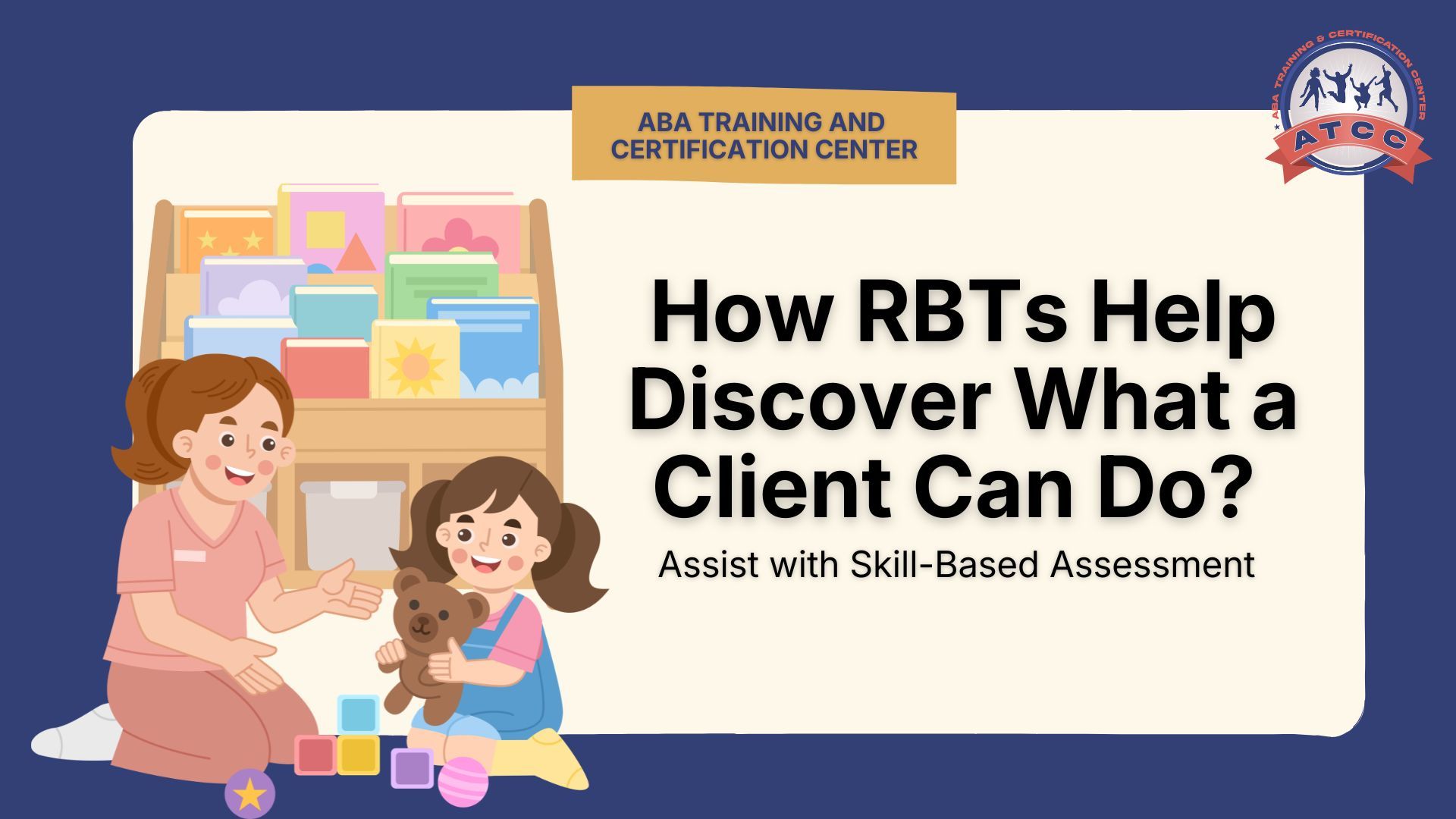
RBTs® play an important role in this process by preparing materials, observing client responses, recording measurable information, and communicating with the supervising BCBA®. Their work helps turn observations into useful data that can guide individualized treatment goals and support meaningful client progress.
What Can a Skill-Based Assessment Reveal?
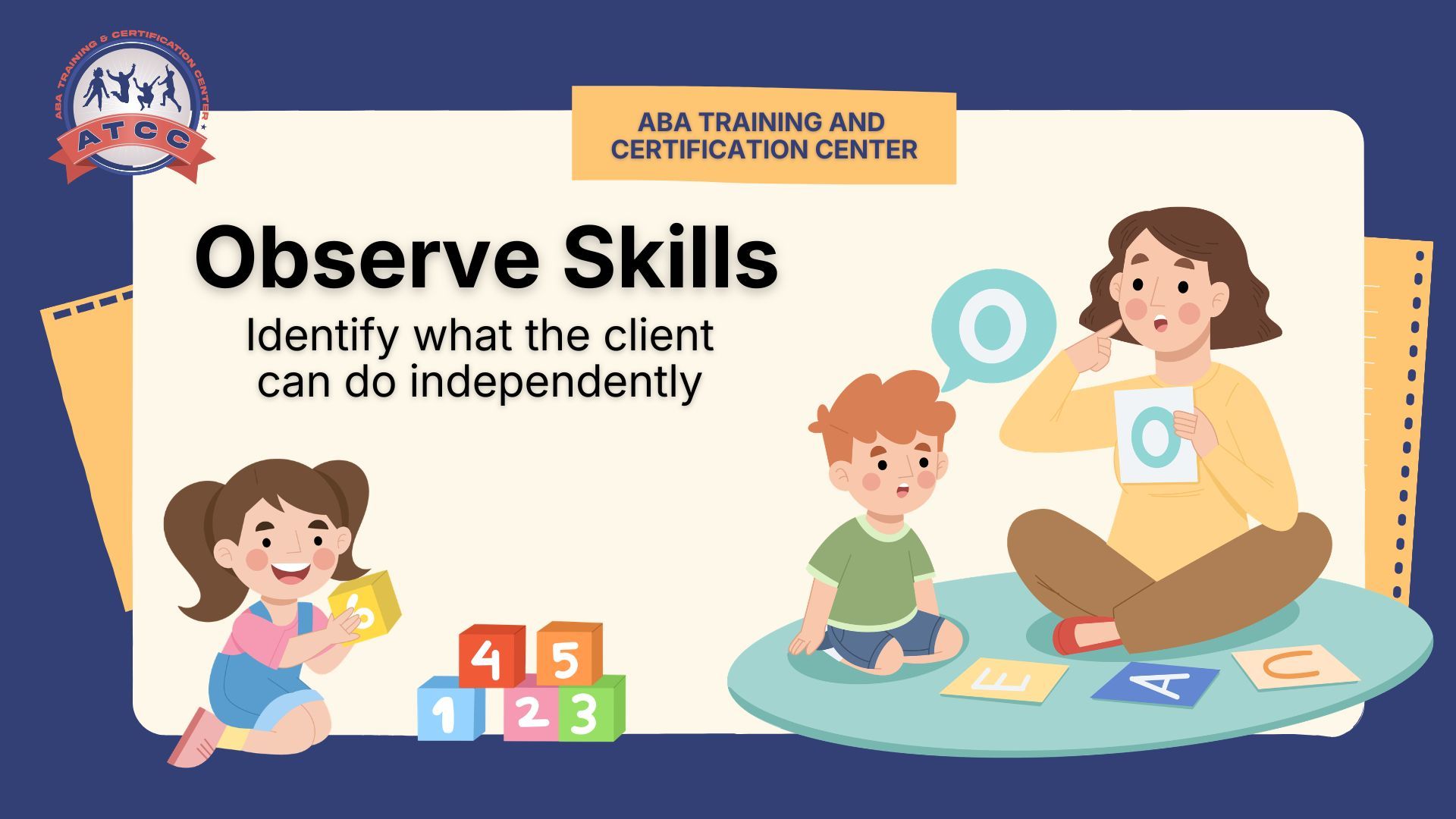
A skill-based assessment gives the ABA team a clearer picture of what a client can already do and which skills may need more support. These assessments may look at different areas, including:
- Communication skills
- Social interactions
- Play skills
- Academic abilities
- Daily living routines
- Independence with everyday tasks
Instead of making assumptions, the team observes how the client responds during specific activities. For example, a client may be able to identify colors, complete a simple puzzle, or follow one-step directions independently. At the same time, the client may have difficulty waiting for a turn, asking for help, or completing a daily routine without support.
- Identify skills the client has already mastered
- Recognize emerging skills that are still developing
- Find areas where additional teaching may be needed
- Create goals based on the client’s actual abilities
- Avoid using the same treatment approach for every client
Every client has different strengths, learning needs, and areas for growth. By identifying what the client can already do, the BCBA® can create goals that build on those strengths while addressing important skill deficits.
How Do RBTs® Turn Observations Into Useful Data?
During skill-based assessments, RBTs® carefully observe the client and record clear, measurable information. This may include:
- How often a response occurs
- How long a client completes a task
- Whether the skill is completed independently
- Whether prompts are needed
- How accurately the client responds
Instead of writing that a client “did well,” an RBT® may document that the client completed four out of five steps independently or waited 20 seconds for a turn.
RBTs® may use data sheets, timers, checklists, and task lists to stay organized. This accurate information helps the BCBA® understand the client’s abilities and make decisions about future goals and teaching strategies.
How Does Assessment Data Become a Personalized Treatment Plan?
After the assessment is completed, the information must be organized and reviewed. RBTs® may assist by arranging the data into clear categories, such as:
- Skills the client has mastered
- Skills that are beginning to develop
- Skills that require additional support
- Tasks completed independently
- Tasks completed with prompting
- Areas that should be monitored further
The supervising BCBA® reviews the information to confirm that it is accurate and connected to the purpose of the assessment. The BCBA® can then use the results to develop goals that match the client’s individual needs.
- If a client can complete most steps of handwashing but needs help turning off the faucet, the treatment plan may focus on completing the final step independently.
- If a client can identify colors but has difficulty waiting during a game, the plan may include goals for turn-taking and waiting.
- If a client can request preferred items but does not ask for help, the BCBA® may add a functional communication goal.
- If a client completes a task only with prompts, the intervention may focus on gradually increasing independence.Skills the client has mastered
Assessment data helps the team create treatment plans that are:
- Individualized
- Measurable
- Realistic
- Meaningful
- Based on the client’s actual strengths and needs
Keep Learning with ATCC
Want to see how RBTs® assist with skill-based assessments in action? Check out this sneak peek from ATCC’s all-new 2026 RBT® Training Course, Chapter 20: Assisting with Skill-Based Assessments. This video highlights how RBTs® support preparation, observation, data collection, and collaboration with the BCBA® to help create meaningful and individualized treatment goals.