RBT® Training Options
Write your awesome label here.
✅ 87.2% first-time pass rate on the RBT® board examination!
📚 4 study resources, $1,196 value — now free upon completion of the ATCC® 40-hour RBT Training course.
💬 AI-powered practice support!
💬 AI-powered practice support!
In ABA, we’re not trying to be “mean” or overly technical when we insist on clear, measurable behavior definitions. We’re trying to be accurate. Because here’s the truth: if a behavior can’t be counted, timed, or clearly identified, you can’t confidently say whether it’s improving, getting worse, or staying the same. And if you can’t tell that… you’re not really effectively intervening the behavior—you’re guessing.
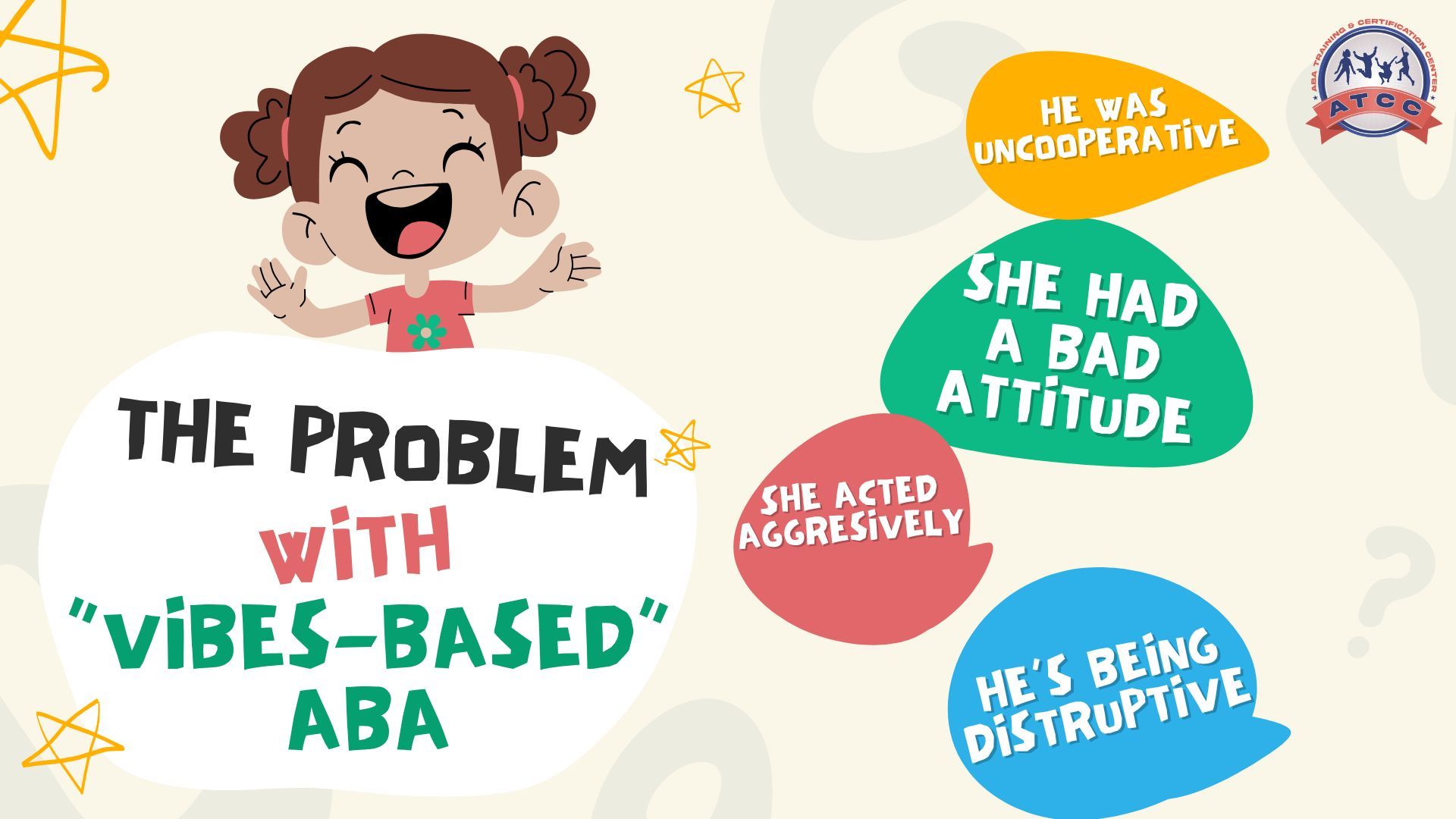
A lot of referral notes and everyday language sound like this:
“He was being disruptive.”
“She had a bad attitude.”
“He acted aggressively.”
“She was uncooperative.”
“He was off-task.”
These statements feel descriptive, but they’re actually interpretations. Two people can read “uncooperative” and imagine completely different behaviors. One staff member might mean “didn’t start work,” another might mean “cried,” another might mean “said no,” and someone else might mean “left the seat.” When the definition changes depending on who’s watching, the data becomes unreliable.
And unreliable data leads to unreliable decisions...
If You Can’t Measure It, You Can’t Prove Change
ABA depends on being able to answer questions like:
Without measurable definitions, you can’t show real progress. That matters for the client, the family, the school team, and your BCBA®—because decisions should be based on evidence, not impressions.
- Is the behavior happening more or less over time?
- Is it happening in specific settings (like math class)?
- Does it happen after certain triggers (like a demand)?
- Is an intervention actually working… or did the environment change?
Without measurable definitions, you can’t show real progress. That matters for the client, the family, the school team, and your BCBA®—because decisions should be based on evidence, not impressions.
“But I Know What the Behavior Looks Like…”
That may be true. But what about everyone else?
You might know what “disruptive” looks like to you. But your coworker might record something totally different. If the client’s teacher describes “acting out,” it may include shouting, tapping, leaving the seat, refusing work, or tearing paper—each of those behaviors could have a different function and require a different plan.
When behavior is clearly defined, you move beyond labels and address exactly what is happening.
You might know what “disruptive” looks like to you. But your coworker might record something totally different. If the client’s teacher describes “acting out,” it may include shouting, tapping, leaving the seat, refusing work, or tearing paper—each of those behaviors could have a different function and require a different plan.
When behavior is clearly defined, you move beyond labels and address exactly what is happening.
What It Really Means
Counting doesn’t always mean tally marks.
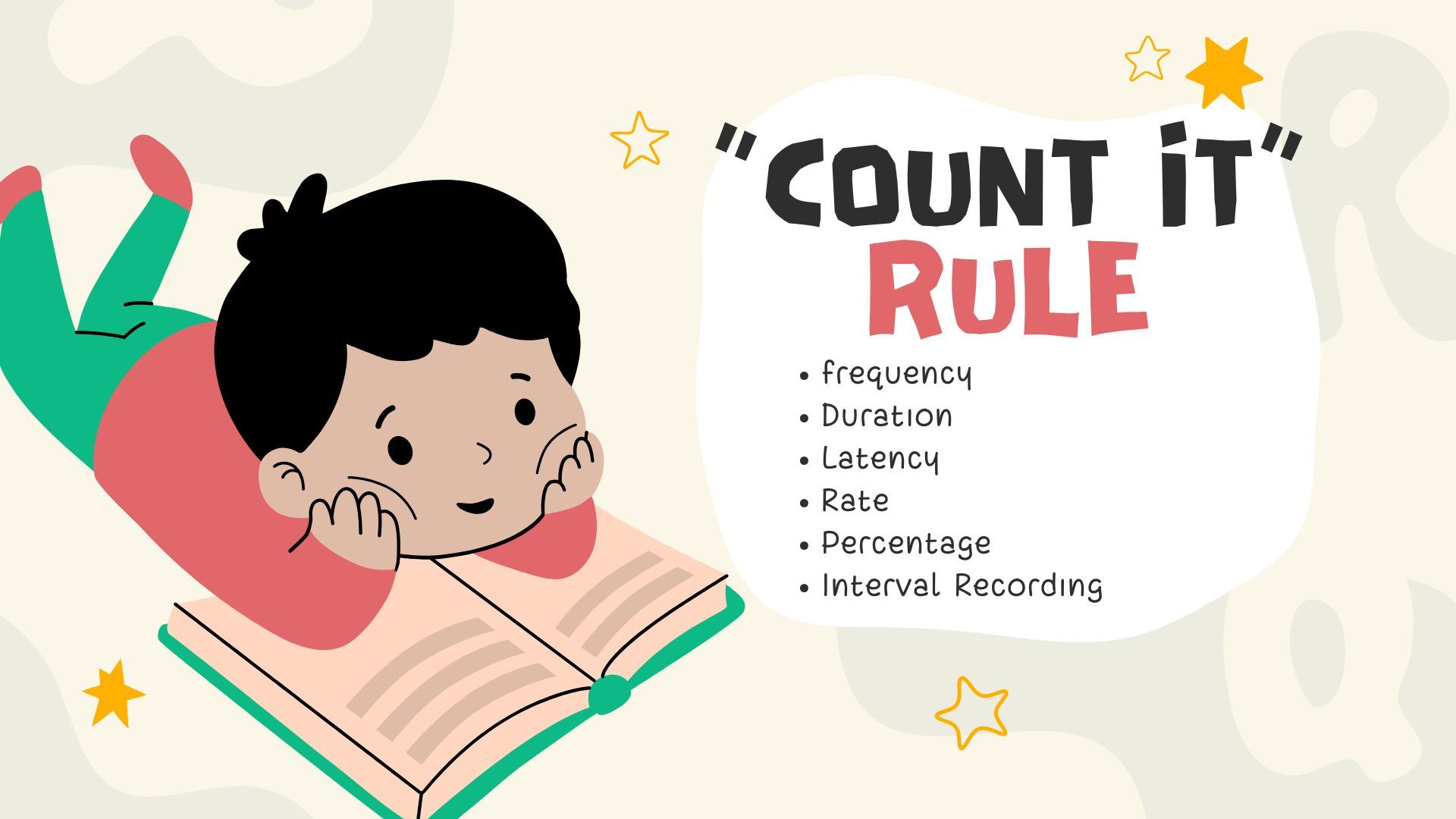
It means you can measure the behavior in at least one solid way:
If you can measure it, you can track it. If you can track it, you can evaluate it. If you can evaluate it, you can intervene effectively.
It means you can measure the behavior in at least one solid way:
- Frequency: How many times did it happen?
- Duration: How long did it last?
- Latency: How long until it started after a direction?
- Rate: How many times per minute/hour?
- Percentage: How many correct responses out of total?
- Interval recording: Did it happen during a time block?
If you can measure it, you can track it. If you can track it, you can evaluate it. If you can evaluate it, you can intervene effectively.
Why This Matters for RBT®s
As an RBT®, you’re often the person closest to the real behavior in real time. Your BCBA® can design a great plan, but if the behavior is unclear, your data won’t tell the truth—and the plan can’t be adjusted correctly.
Clear operational definitions protect:
1. The Learner (better support, less guesswork)
2. The Team (everyone measures the same thing)
3. The Intervention (you can show if it’s working)
4. You (your documentation holds up under review)
ABA isn’t about being harsh—it’s about being clear. And clarity is kindness. Because when we can measure behavior accurately, we can support change responsibly.
Keep Learning with ATCC®
Check out a sneak peek of the all-new ATCC® 2026 RBT® Training (3rd Ed.) featuring the skill every RBT® needs: how to write clear, objective, and measurable operational definitions in ABA. Learn why precise definitions are critical for reliable data collection, consistent implementation, and effective communication across teams—key skills for both real-world ABA practice and RBT® exam prep.This preview aligns with the RBT® Test Content Outline (3rd ed.; TCO): A.5. Describe behavior and environment in observable and measurable terms.
ATCC® — No measurement, no progress.
Guaranteed Security using one of the most advanced encrypted systems on the market.
The information in this page is being processed and encrypted securely using industry-leading encryption and fraud prevention tools.