A preference assessment is a systematic way of identifying items, activities, or experiences that a person appears to prefer.
Instead of assuming what someone likes, ABA professionals can observe choices and engagement to gather more objective information about preferences.
Preference assessments may involve things such as:
- Toys
-
Activities
-
Snacks
-
Games
-
Music
-
Sensory items
-
Attention
-
Breaks
-
Books or videos
-
Other individualized interests
The goal is usually to develop a better understanding of what the individual may enjoy or choose when given options.
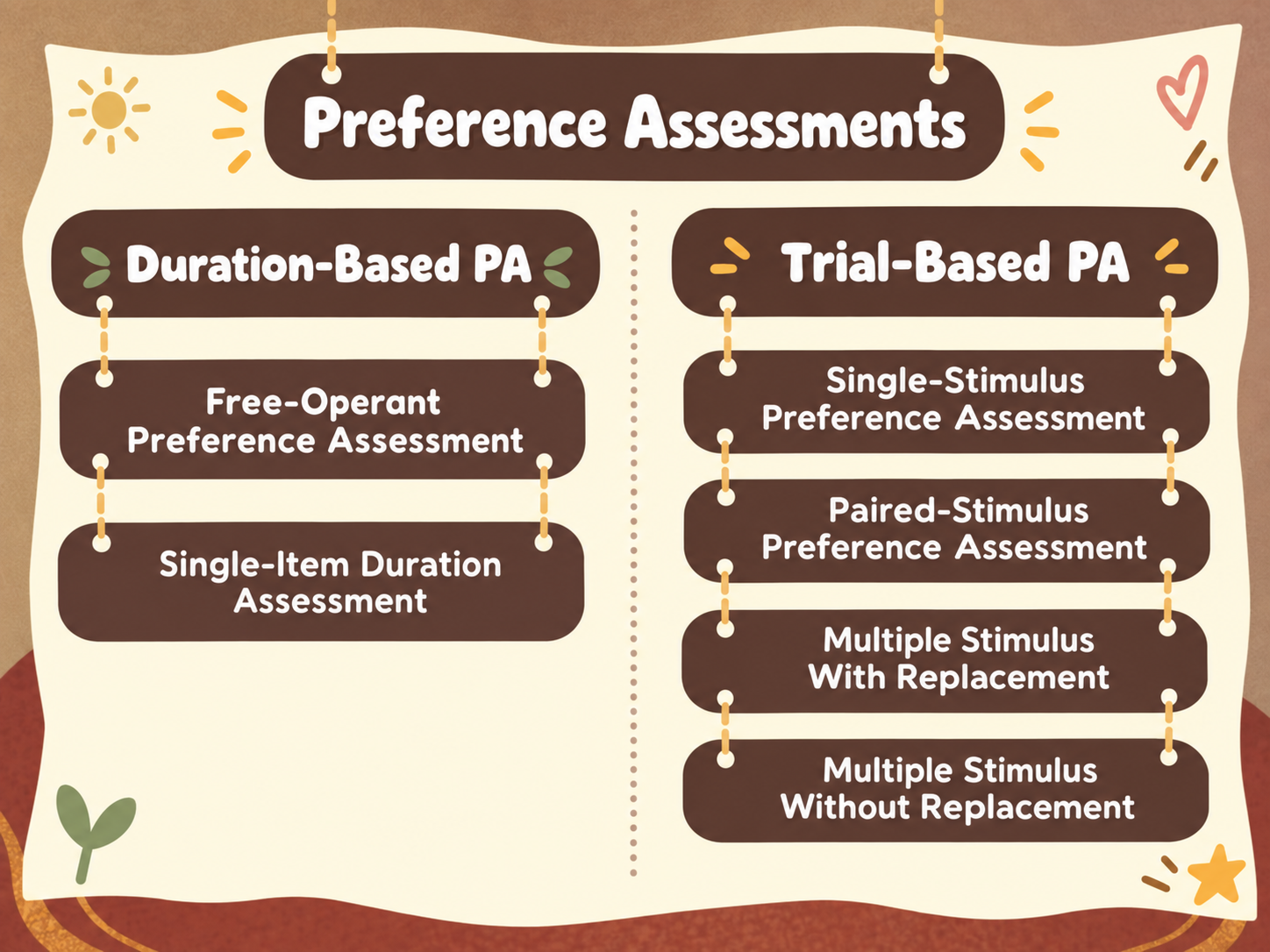
There are several ways behavior analysts may assess preferences. The method selected may depend on the learner's skills, the environment, and the purpose of the assessment.
Free-Operant Preference Assessment
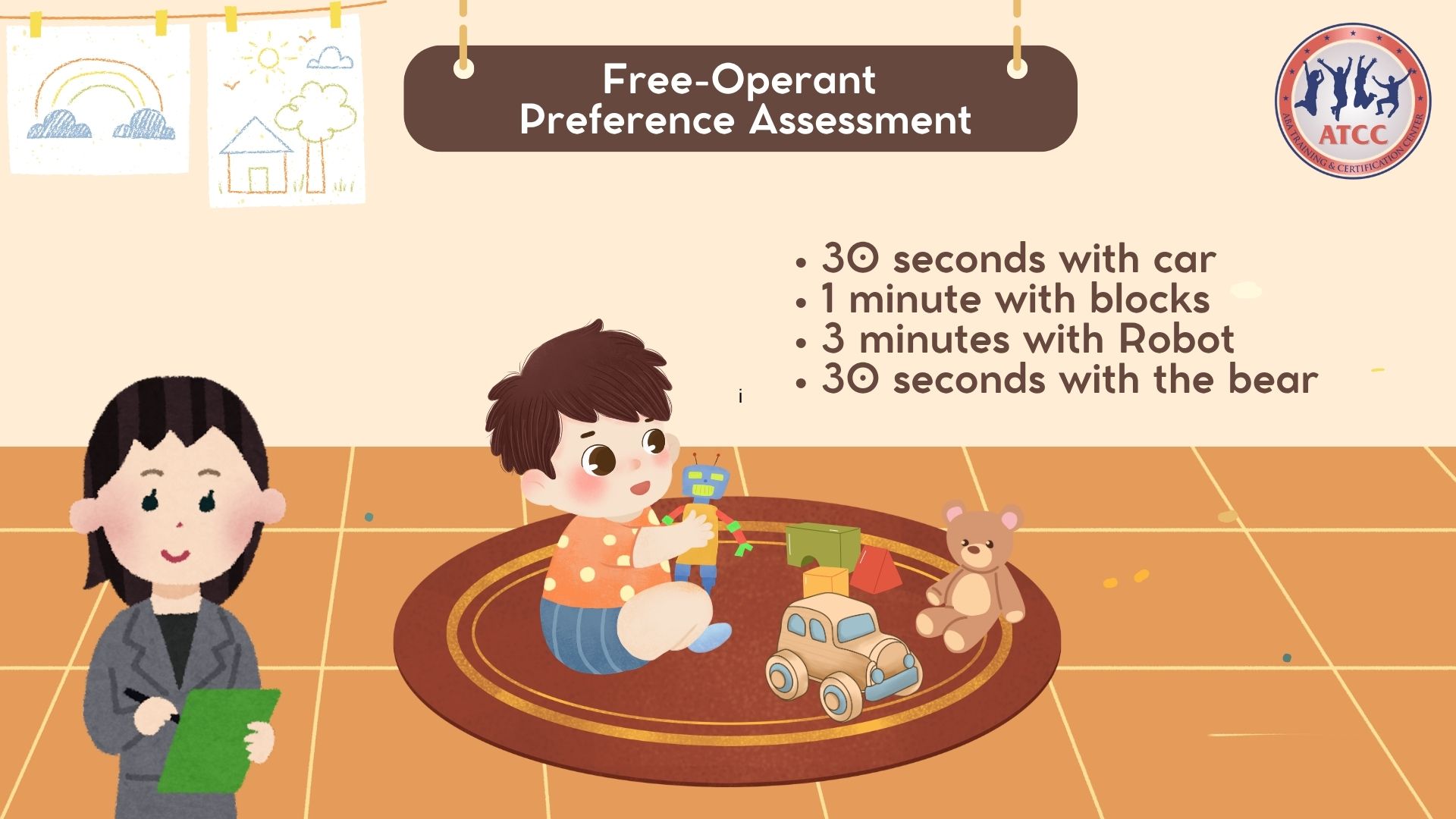
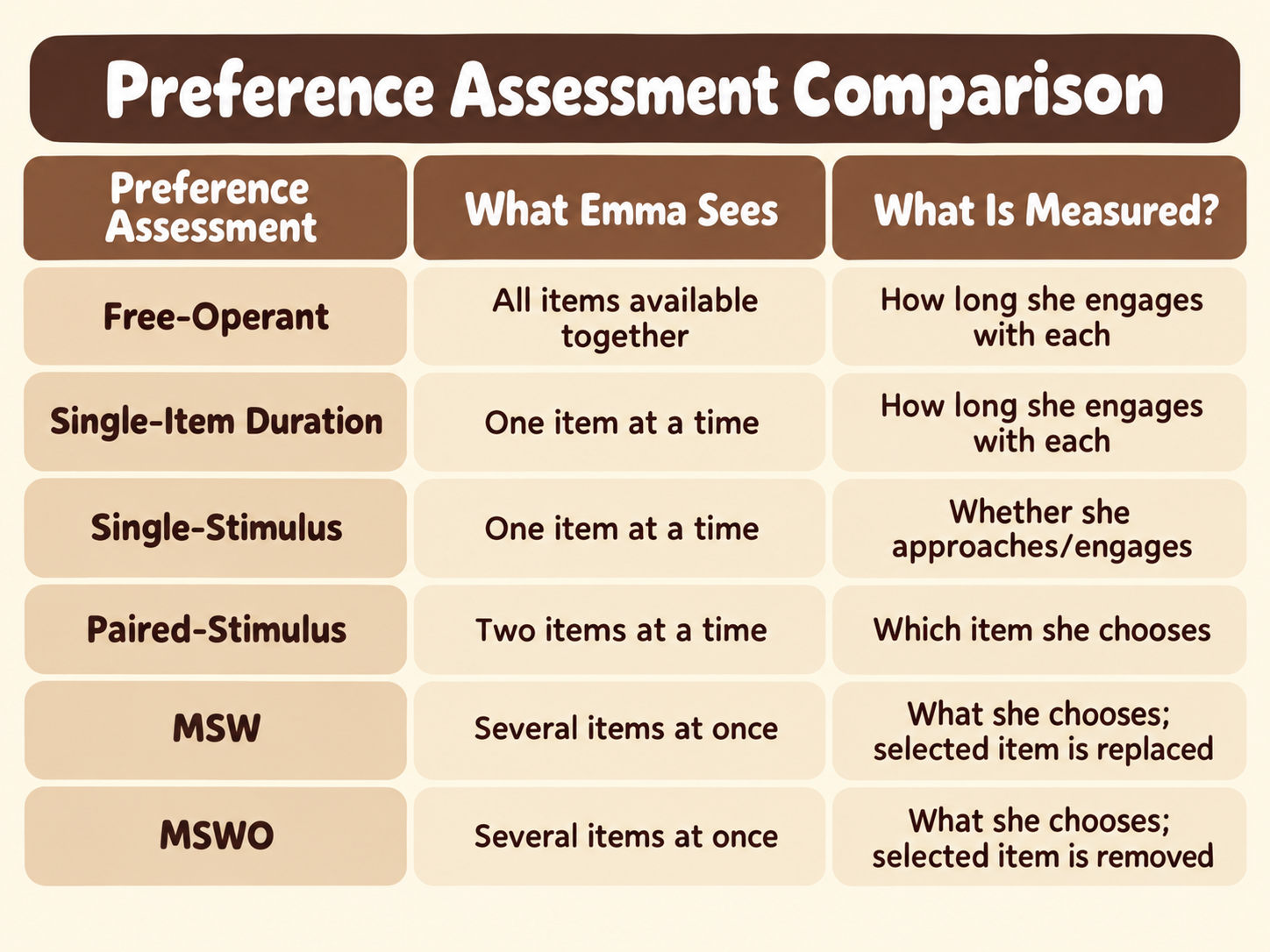
In a free-operant preference assessment, all of the items are available at the same time.
For example:
Emma is allowed to move freely between the items, and the RBT® records how long she engages with each one.
- Bubbles: 2 minutes
-
Toy car: 30 seconds
-
Crayons: 1 minute, 30 seconds
-
Puzzle: 1 minute
Because Emma spent the most time with the bubbles, bubbles may be considered the most preferred item during that observation.
What makes this different?
Emma has access to all four items at the same time and can move freely between them.
Single-Item Preference Assessment
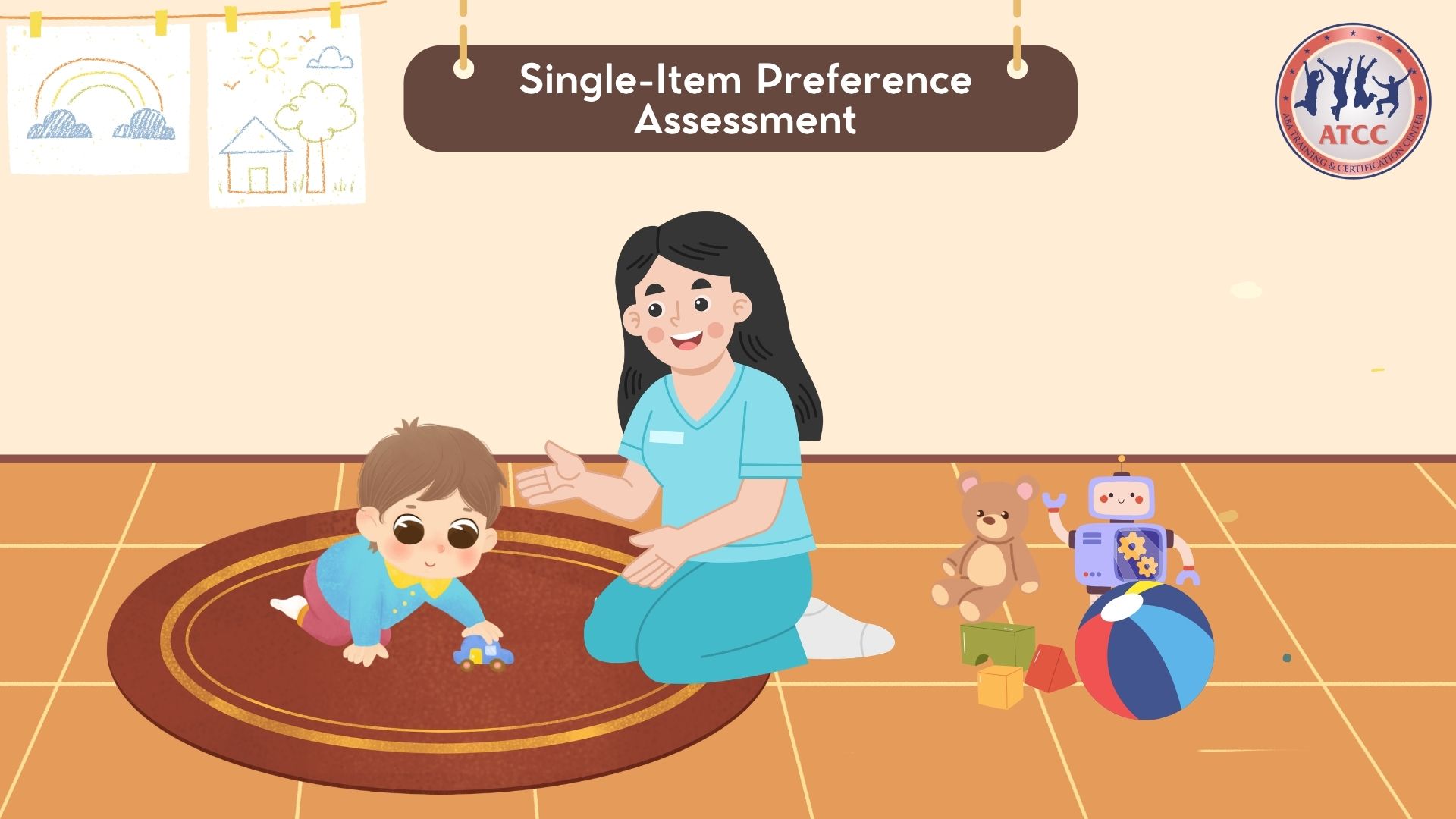
In a single-item duration assessment, the same items are presented one at a time.
For example:
Each item may be available for a set period, such as two minutes, while the RBT® records how long Emma engages with it.
- Bubbles: 1 minute, 45 seconds
-
Toy car: 40 seconds
-
Crayons: 1 minute, 20 seconds
-
Puzzle: 50 seconds
Again, bubbles may appear to be the most preferred item because Emma engaged with them for the longest amount of time.
What makes this different?
Emma sees only one item at a time, and preference is based on the duration of engagement.
Single-Stimulus Preference Assessment
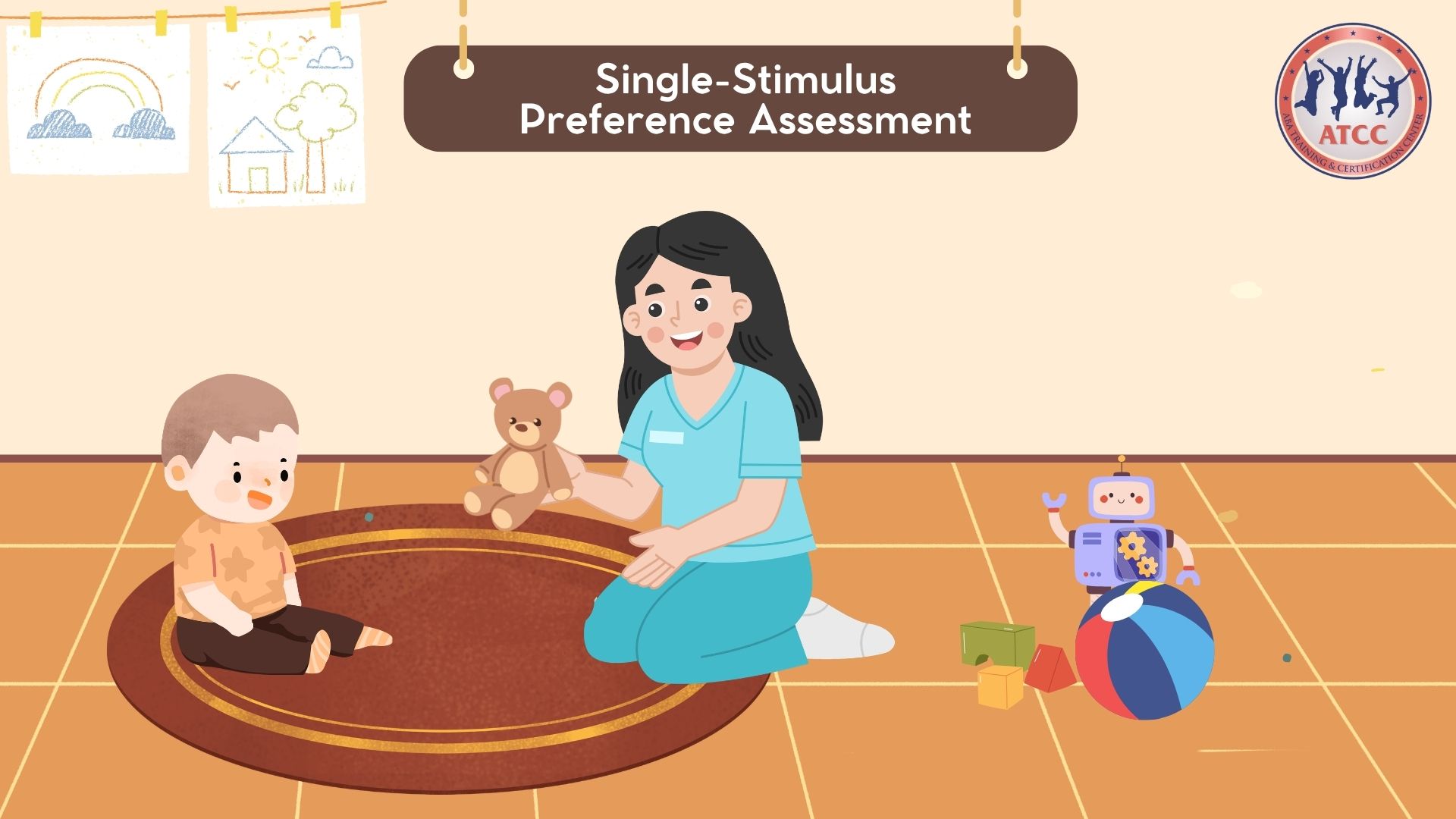
In a single-stimulus preference assessment, one item is presented at a time.
For example:
The RBT® presents bubbles to Emma.
Emma approaches the bubbles, so the RBT® records an approach and allows brief access.
Next, the toy car is presented.
Emma does not approach it, so the RBT® records no approach and moves to the next item.
The same procedure is repeated with crayons and the puzzle.
What makes this different?
Emma sees one item at a time, and the RBT® records whether she approaches or interacts with it, rather than how long she plays with it.
Paired-Stimulus Preference Assessment
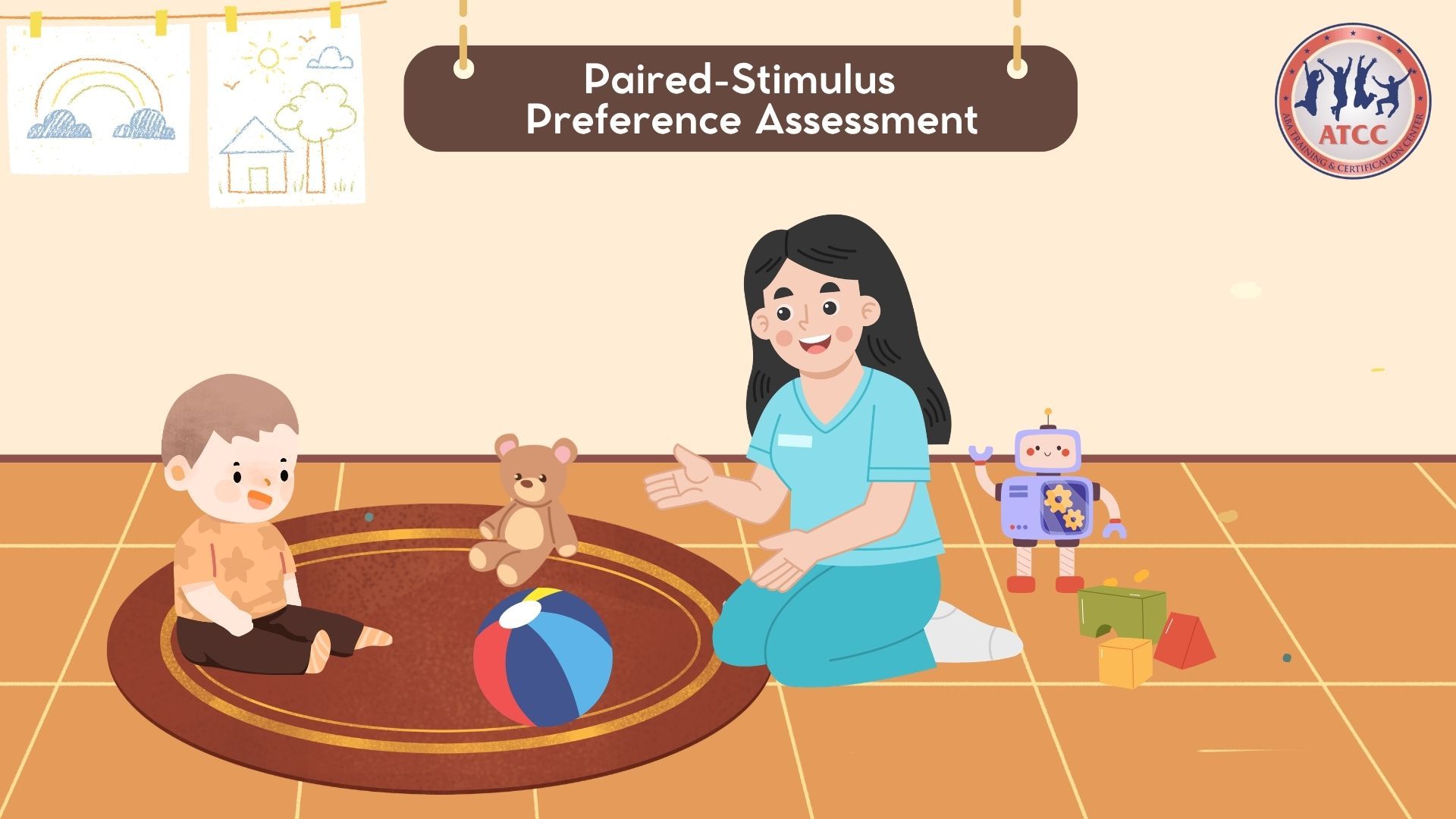
In a paired-stimulus preference assessment, Emma is presented with two items at a time and chooses between them.
For example:
Trial 1:
Bubbles vs. toy car
Emma chooses bubbles.
Trial 2:
Crayons vs. puzzle
Emma chooses crayons.
Trial 3:
Bubbles vs. crayons
Emma chooses bubbles.
Trial 4:
Toy car vs. puzzle
Emma chooses the puzzle.
Different pairs continue to be presented until the items have been compared.
The RBT® records how often each item is selected.
If Emma selects bubbles most often, bubbles may rank highest in her preference hierarchy.
What makes this different?
Emma chooses between two items at a time.
Multiple Stimulus With Replacement
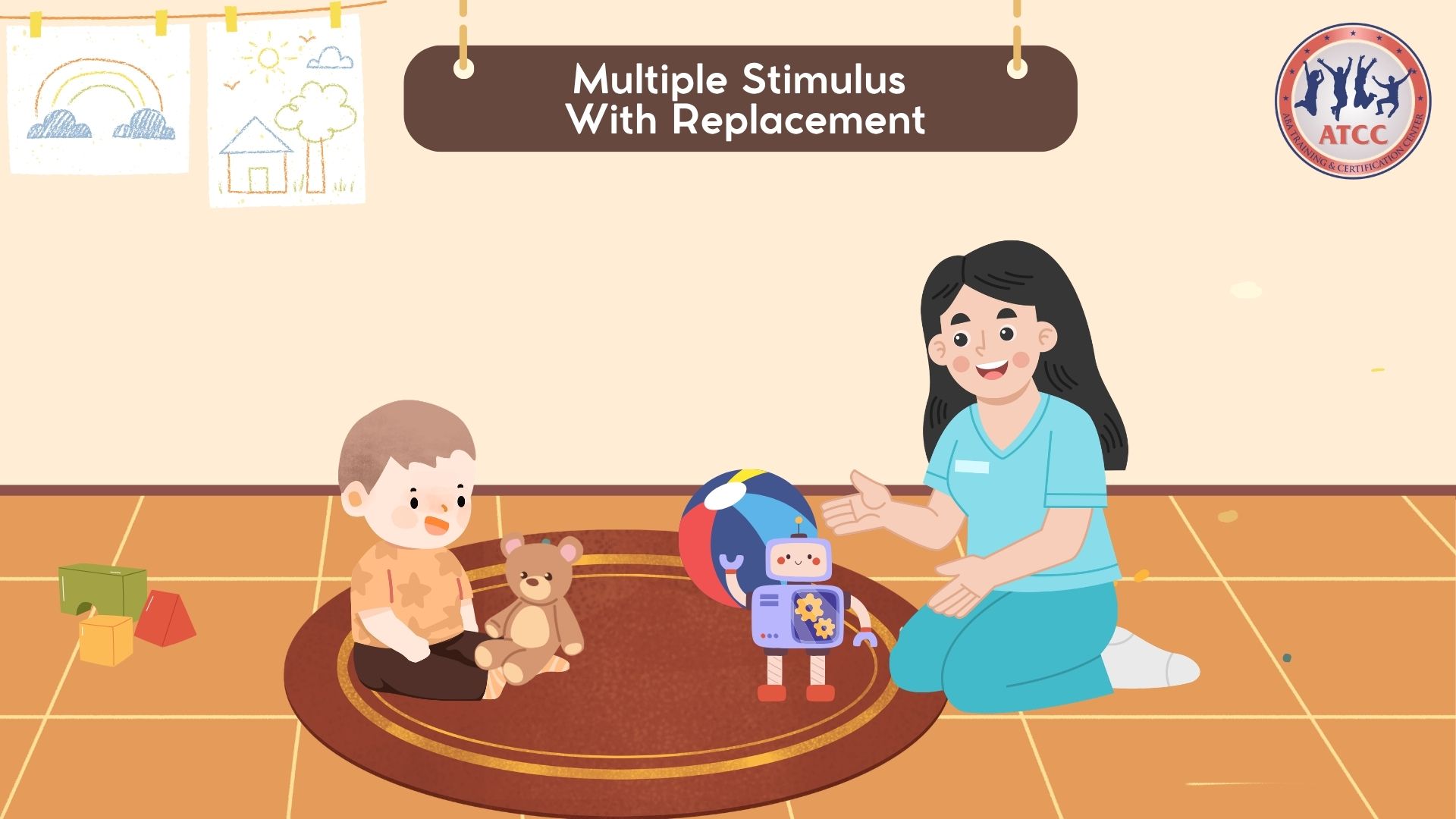
In a Multiple Stimulus With Replacement (MSW) assessment, all four items are presented together.
For example:
Emma sees:
Bubbles | Toy Car | Crayons | Puzzle
She chooses bubbles.
The RBT® allows brief access to the bubbles.
The bubbles are then returned to the array.
The items may be rearranged, and Emma chooses again.
She may choose bubbles again because they remain available during every trial.
What makes this different?
Emma chooses from several items at once, and the selected item is put back for the next trial.
Multiple Stimulus Without Replacement
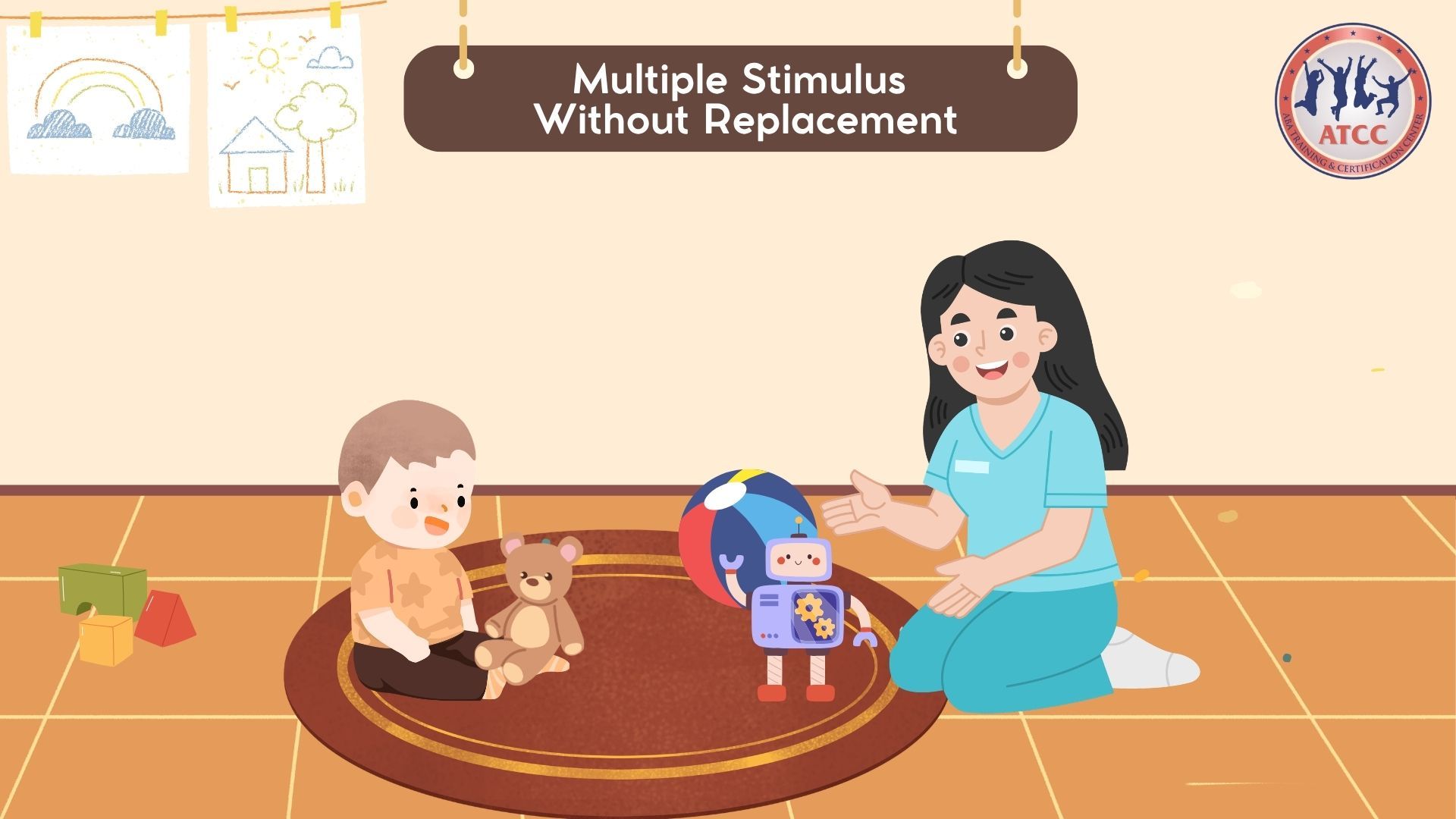
In a Multiple Stimulus Without Replacement (MSWO) assessment, Emma also begins with all four items available.
For example:
First trial:
Bubbles | Toy Car | Crayons | Puzzle
Emma chooses bubbles.
The RBT® allows brief access to the bubbles, but this time the bubbles are removed.
The remaining items are rearranged:
Crayons | Puzzle | Toy Car
Emma chooses crayons.
Crayons are then removed.
The remaining items are presented again:
Toy Car | Puzzle
Emma chooses the puzzle.
The process continues until all items have been selected or Emma stops making choices.
A possible preference hierarchy would be:
Bubbles
Crayons
Puzzle
Toy car
What makes this different?
Emma chooses from several items at once, but each selected item is removed and not returned.