Flexible RBT® Training Options That Fit Your Schedule
When people hear the word punishment, they may sometimes imagine harsh consequences, physical discipline, or intentionally making someone uncomfortable. In ABA, punishment has a specific scientific meaning: a consequence occurs after a behavior, and that behavior decreases in the future. Ethical ABA practice does not use punishment to hurt, scare, shame, or control people. Punishment procedures must be safe, respectful, clinically appropriate, and supervised.
Understanding this distinction is important for parents, caregivers, educators, aspiring RBT® professionals, and anyone learning about ABA therapy.
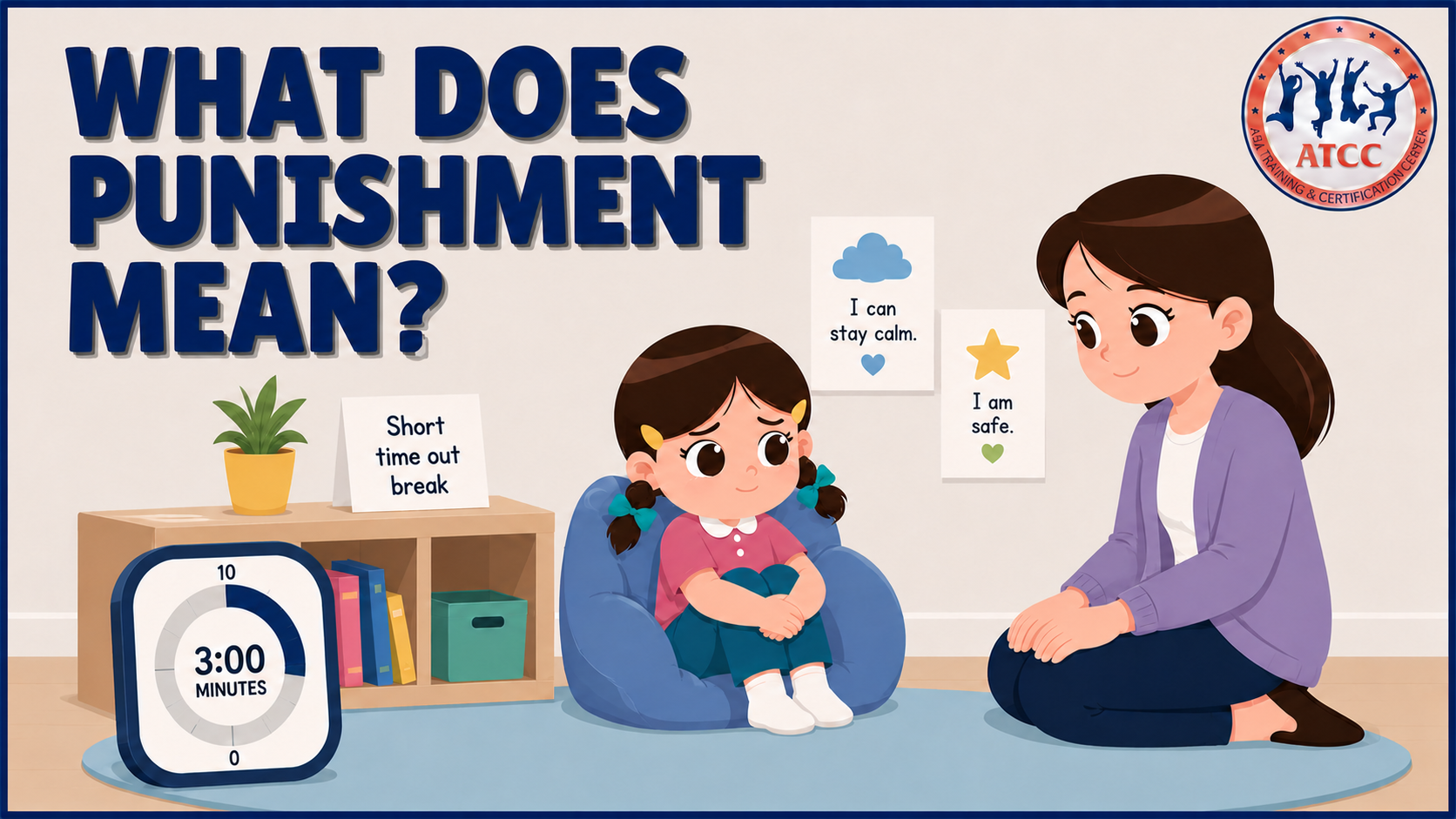
In ABA, punishment is defined as a consequence that occurs after a behavior and decreases the likelihood that the behavior will happen again in the future.
The word punishment does not describe whether a consequence is harsh, unpleasant, or inappropriate. It describes the effect the consequence has on behavior.
For a consequence to be considered punishment, the behavior must actually decrease over time.
For example, corrective feedback, such as saying, “That was an incorrect choice,” may be intended to reduce a behavior. However, in ABA, it is only considered punishment if the behavior becomes less likely to occur in the future.
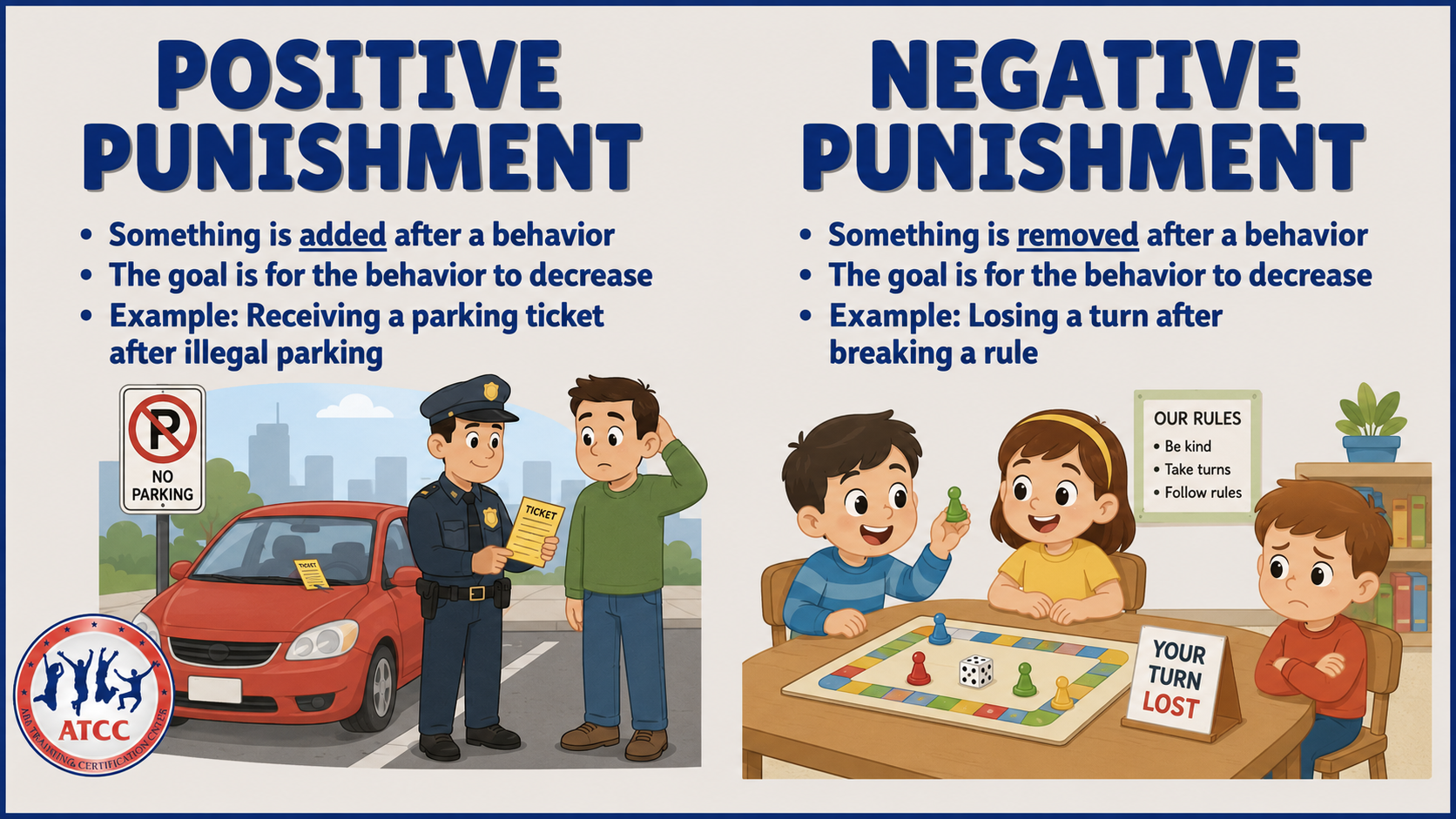
In ABA, the terms positive and negative do not mean good and bad.
- Positive means something is added.
- Negative means something is removed.
- Punishment means the behavior decreases.
What Is Positive Punishment?
Positive punishment occurs when something is added after a behavior and that addition decreases the behavior in the future.
For example, an employee repeatedly submits incomplete paperwork. After each incomplete submission, the supervisor provides immediate corrective feedback. If the employee begins submitting complete paperwork more consistently, the feedback may be functioning as positive punishment for incomplete submissions.
Other everyday examples may include:
- Receiving a parking ticket after parking illegally
- Receiving corrective feedback after making the same work error
- Being assigned an additional task after failing to follow an established rule
The added consequence must reduce the behavior for it to qualify as positive punishment.
What Is Negative Punishment?
Negative punishment occurs when something is removed after a behavior and that removal decreases the behavior in the future.
For example, a teenager loses access to screen time after repeatedly breaking an agreed-upon household rule. If breaking the rule becomes less frequent, the loss of screen time may be functioning as negative punishment.
Other everyday examples may include:
- Losing access to a preferred activity
- Having a privilege temporarily removed
- Losing points in a reward system following a clearly defined behavior
Again, removing something does not automatically make the procedure negative punishment. The behavior must decrease over time.
Everyday Examples of Punishment
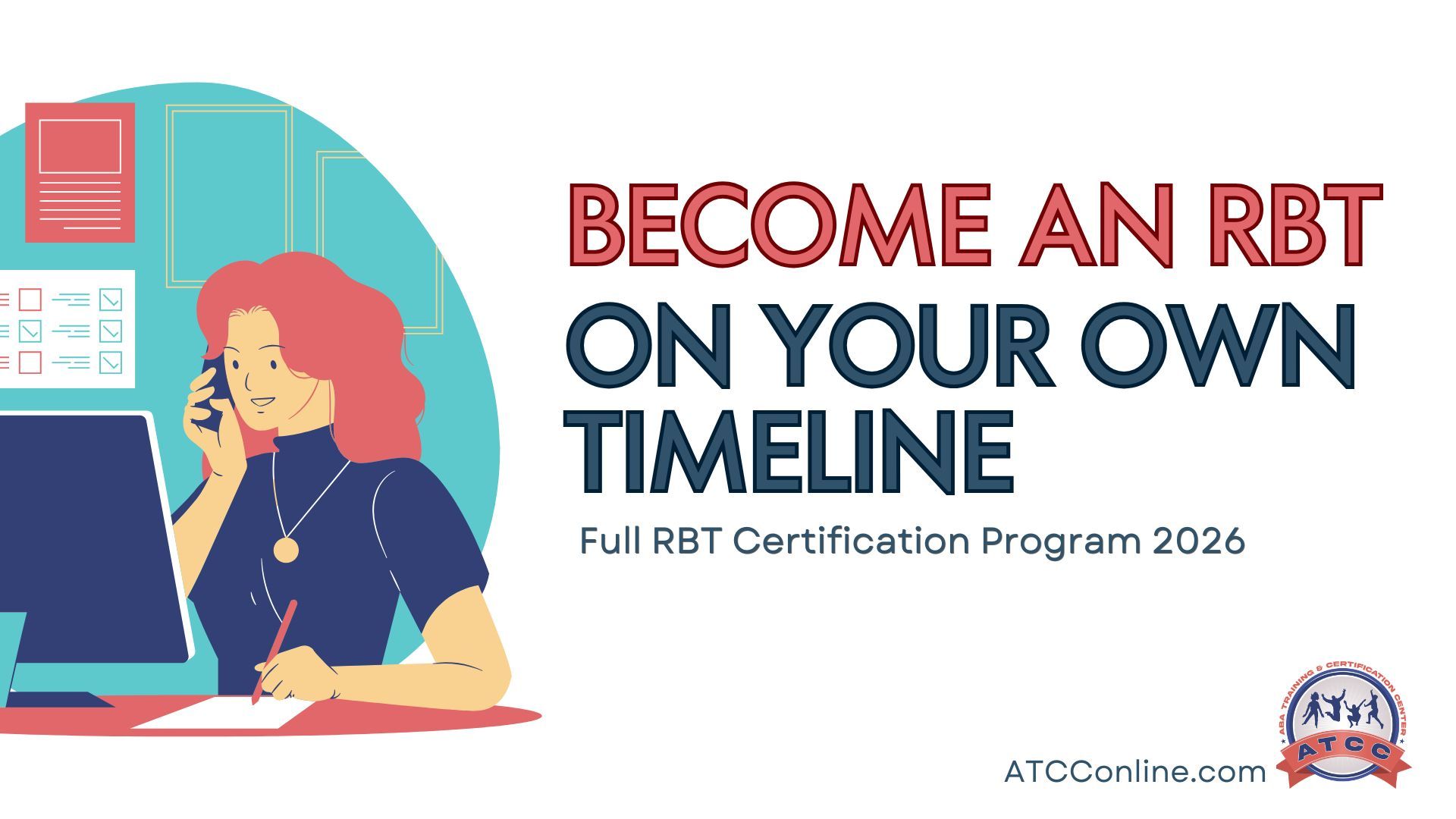
Punishment occurs in everyday life, even outside of ABA therapy.
A driver may receive a speeding ticket and begin driving more slowly. A student may receive corrective feedback and make fewer errors on future assignments. A child may lose screen time after breaking a household rule and follow the rule more consistently afterward.
These consequences are considered punishment only when they reduce the future occurrence of the behavior.
It is also important to remember that the same consequence may affect different people differently. Losing screen time may reduce a behavior for one person but have no effect on another. This is why behavior must be observed and measured rather than assumed.
Punishment Is Not the Same as Physical Discipline
Punishment in ABA should not be confused with physical discipline, intimidation, humiliation, threats, or emotional harm.
ABA professionals always protect client dignity, follow ethical standards, use evidence-based procedures, and prioritize the client’s safety and well-being.
Punishment does not mean:
- Hitting, spanking, or physically hurting someone
- Yelling at or humiliating a client
- Using threats or intimidation
- Withholding basic needs
- Creating unnecessary fear or discomfort
RBT® professionals must never create or introduce punishment procedures independently. They implement only the procedures included in the client’s written behavior plan and approved by the supervising BCBA.
Why Ethical and Individualized Behavior Plans Matter
Every client has different needs, abilities, preferences, experiences, and goals. A strategy that works for one person may not be appropriate or effective for another.
Ethical behavior plans should be:
- Based on assessment and data
- Individualized to the client
- Designed and supervised by a qualified professional
- Focused on meaningful and socially significant goals
- Implemented consistently and respectfully
- Regularly reviewed for effectiveness and possible side effects
Behavior analysts always introduce reinforcement-based and skill-building strategies before more restrictive procedures. The goal is not simply to stop a behavior. The goal is to understand why the behavior occurs and teach the individual a safer, more effective, or more appropriate alternative.
For example, if a client engages in problem behavior because they need a break, the ABA intervention will most likely focus on teaching the client to communicate, “I need a break.” Teaching this replacement skill can the client get their needs met in a more successful way.
Keep Learning with ATCC

1-877-770-2822
SUPPORT@ATCCONLINE.COM
AFFILIATE PROGRAM
CONTACT US