Learning ABA? 10 Common ABA Terms Explained for Future RBTs®
Alen Faye Crisostomo, BS, RBT
States
Our students gain RBT® and BCBA® certifications with the Behavior Analyst Certification Board (BACB®) in all 50-states and Canada.
Successful Students
We are proud to have students who are committed to changing the world, delivering compassionate ABA intervention, and building a better future for our children.
PASS THE FIRST TIME
For students who complete the ATCC® 40-hour RBT® Training course, 87.2% of ATCC students pass the exam on their first attempt, far above the 73% average pass rate for other providers.
✅ 87.2% first-time pass rate on the RBT® board examination!
📚 4 study resources, $1,196 value — now free upon completion of the ATCC® 40-hour RBT Training course. 💬 AI-powered practice support!
Description:
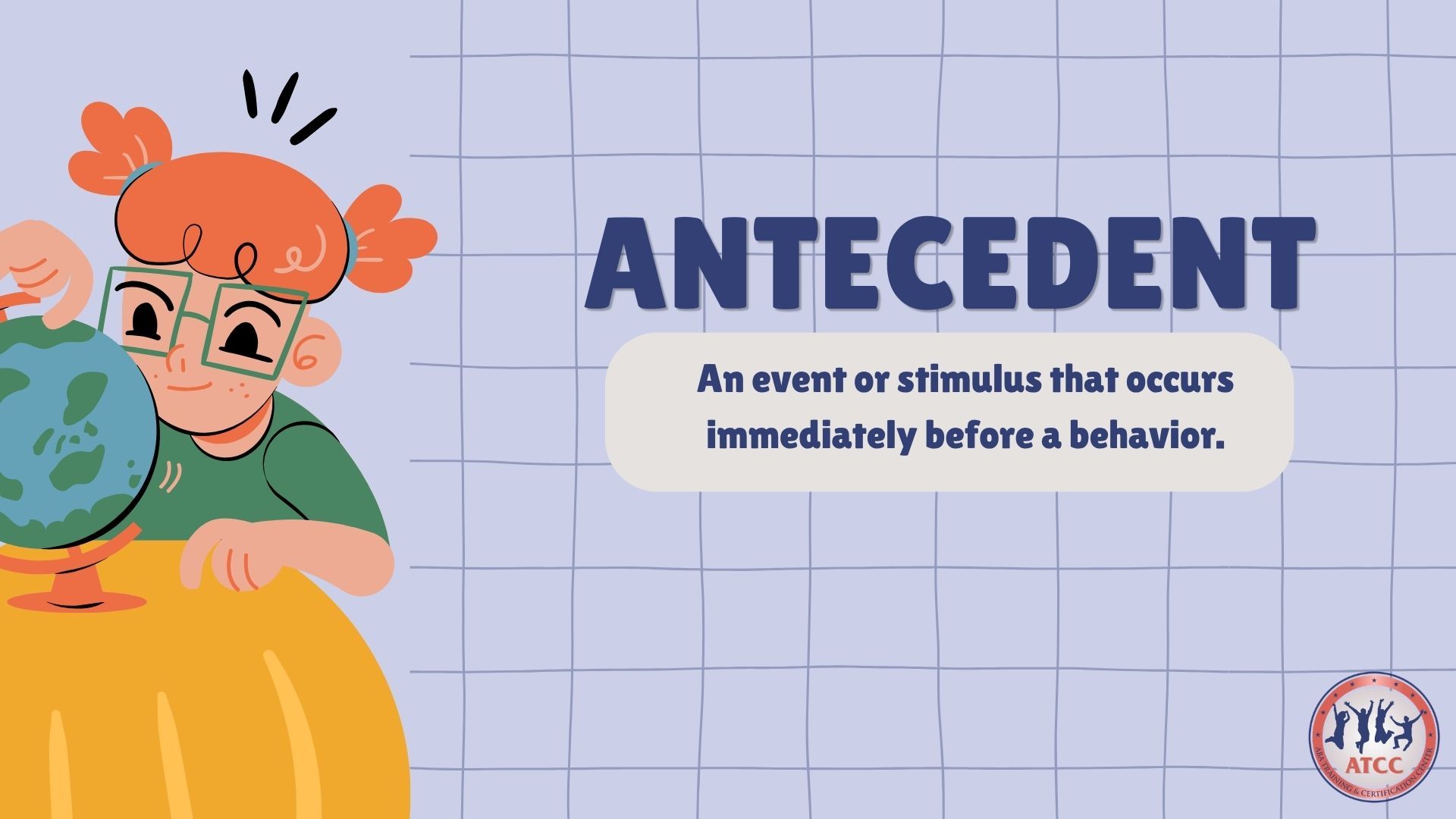
An antecedent is an event or stimulus that happens before a behavior.
Example:
A teacher says, “Please put your toys away.” The learner begins cleaning up. The teacher says, "Way to go, cleaning up!" The teacher's instruction, “Please put your toys away,” is the antecedent.
Easy way to remember:
Antecedent = What happened before.
Description:
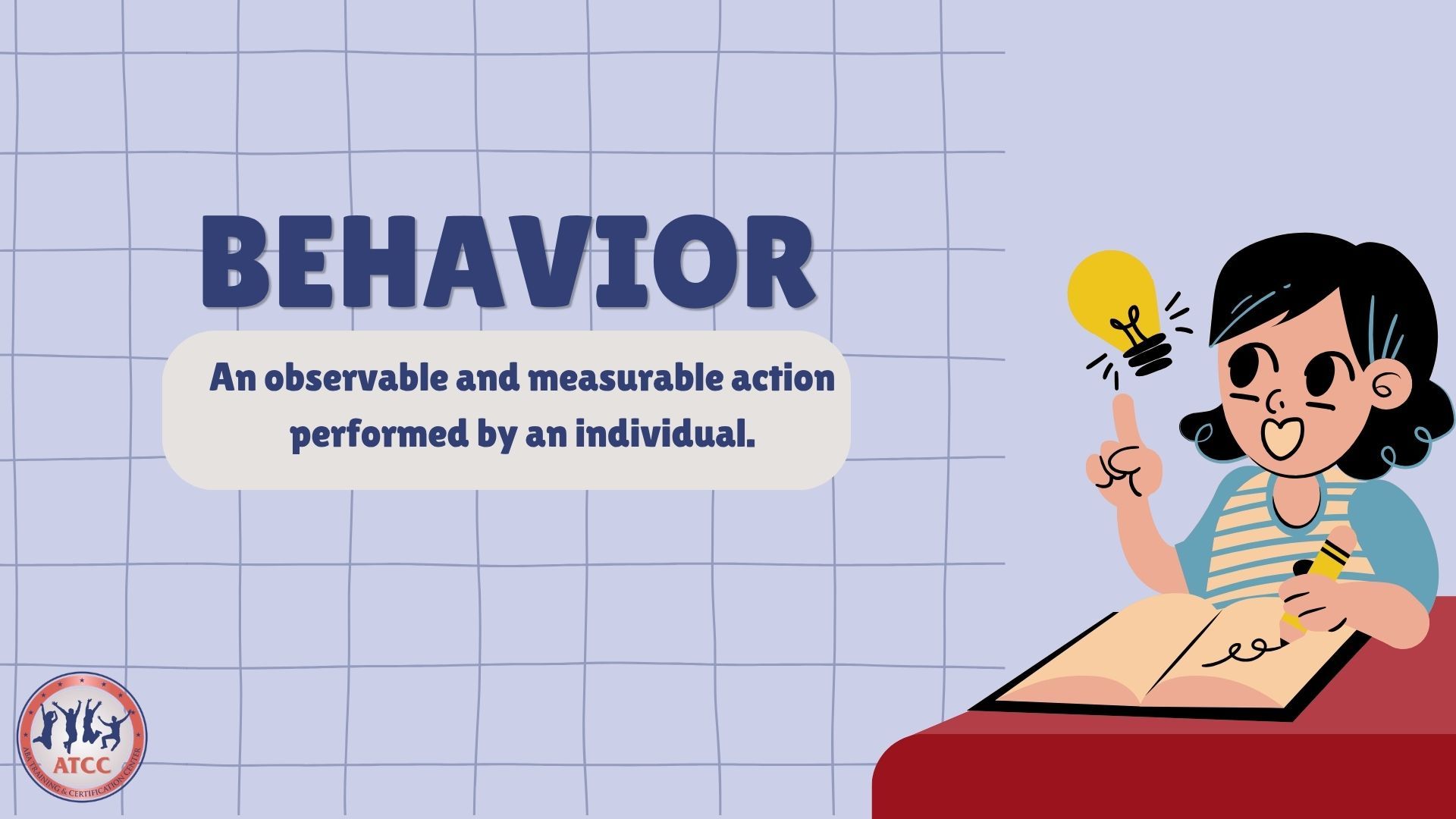
A behavior is an observable and measurable action that a person does.
Example: A teacher says, “Please put your toys away.” The learner begins cleaning up. The teacher says, "Way to go, cleaning up!" The behavior is the action the learner takes to clean up. Easy way to remember:
Behavior = What the person did.
Description:
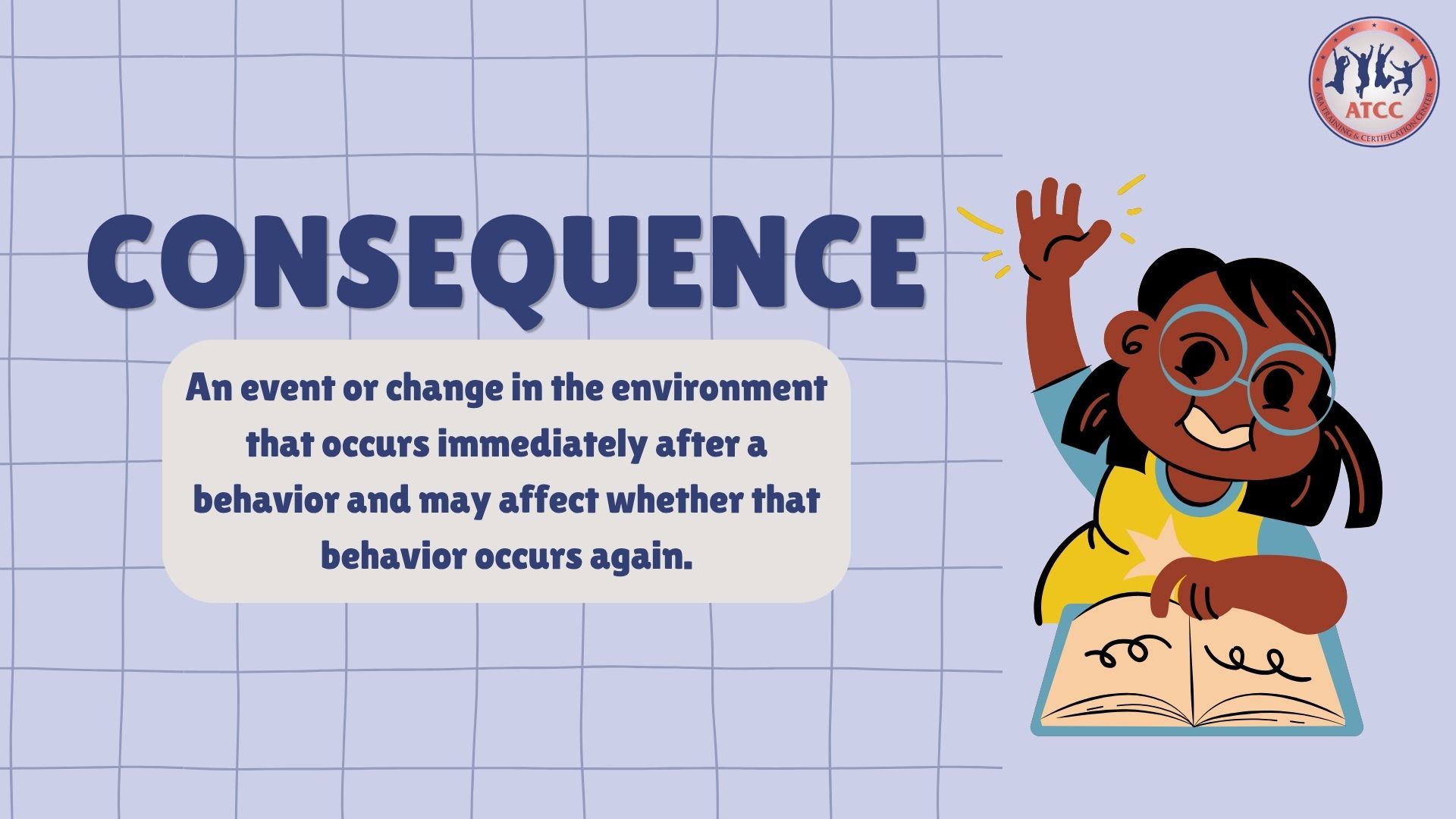
A consequence is an event or change that happens after a behavior and may influence whether that behavior happens again in the future.
Example: A teacher says, “Please put your toys away.” The learner begins cleaning up. The teacher says, "Way to go, cleaning up!" The teacher's praise, “Way to go, cleaning up,” is the consequence.
Easy way to remember:
Consequence = What happened after.
Description:
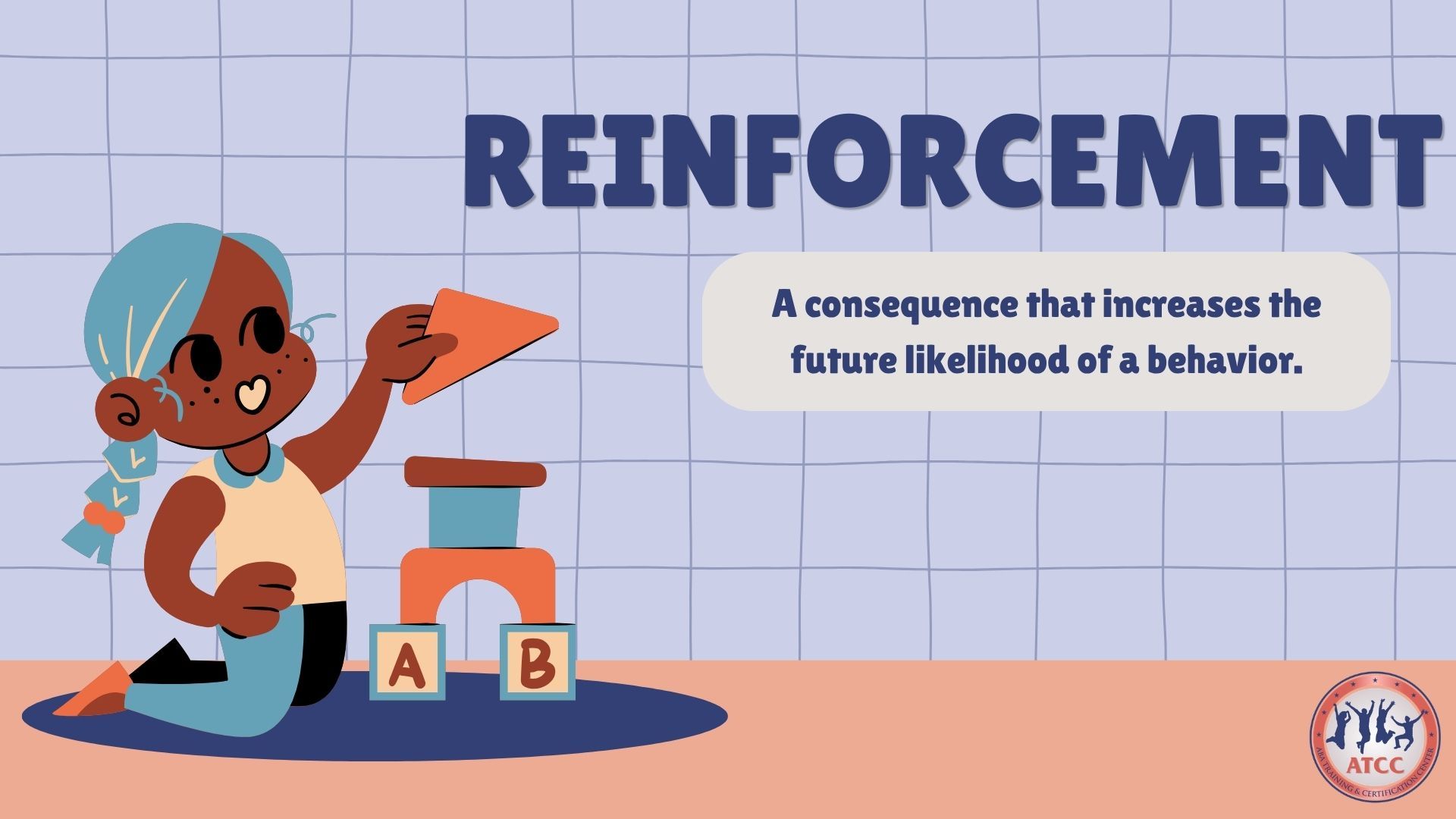
Reinforcement occurs when a consequence increases the future frequency that a behavior will happen again in the future.
Example:
A learner receives the praise "Way to go, cleaning up," each time they clean up their toys. The learner cleans up their toys more often in the future. The praise functioned as reinforcement.
Easy way to remember:
Reinforcement = The behavior increases.
Description:
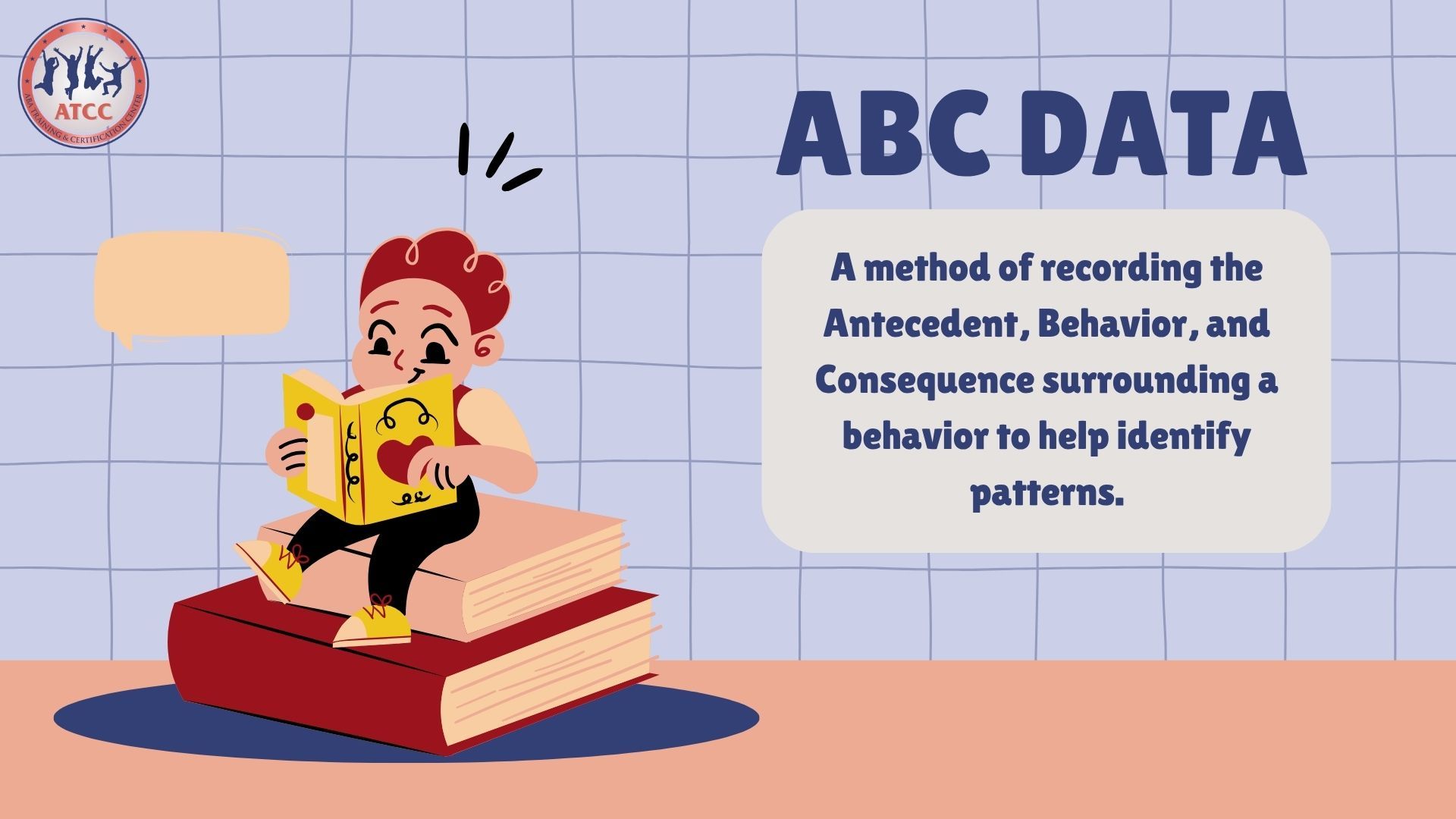
ABC data is a way of recording the Antecedent (A), Behavior (B), and Consequence (C) surrounding a behavior.
Example: A: The RBT says, “Time to clean up.” B: The learner cleans up toys. C: The RBT says, "Way to go, cleaning up!"
Easy way to remember:
A = Before, B = Behavior, C = After
Description:
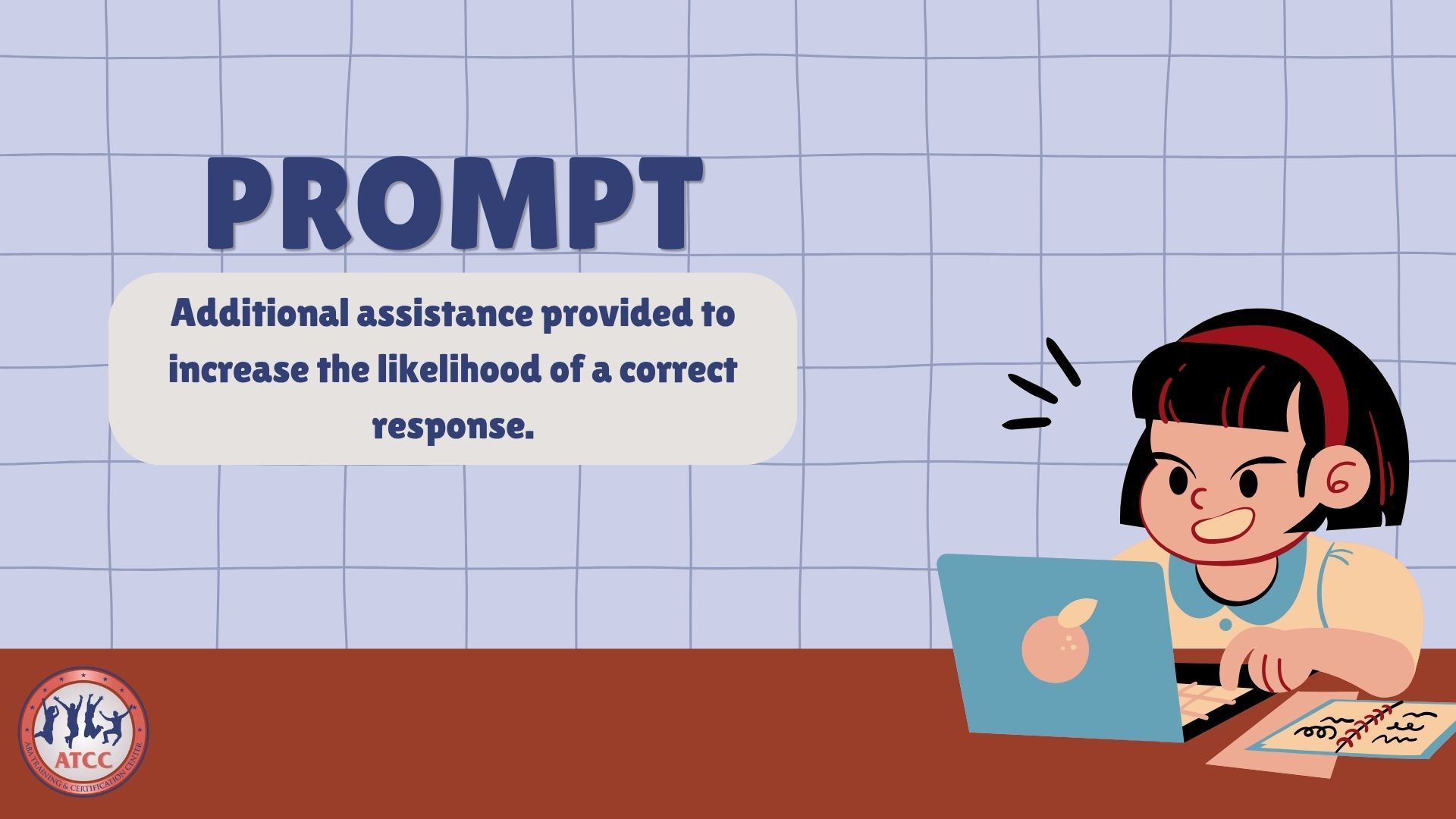
A prompt is additional assistance provided to help a learner make a correct response.
Example: The RBT says, “Please put your toys away,” and then points to the toy bin to help the learner begin cleaning up. Pointing to the toy bin is the prompt. Easy way to remember:
Prompt = Extra help.
Description:
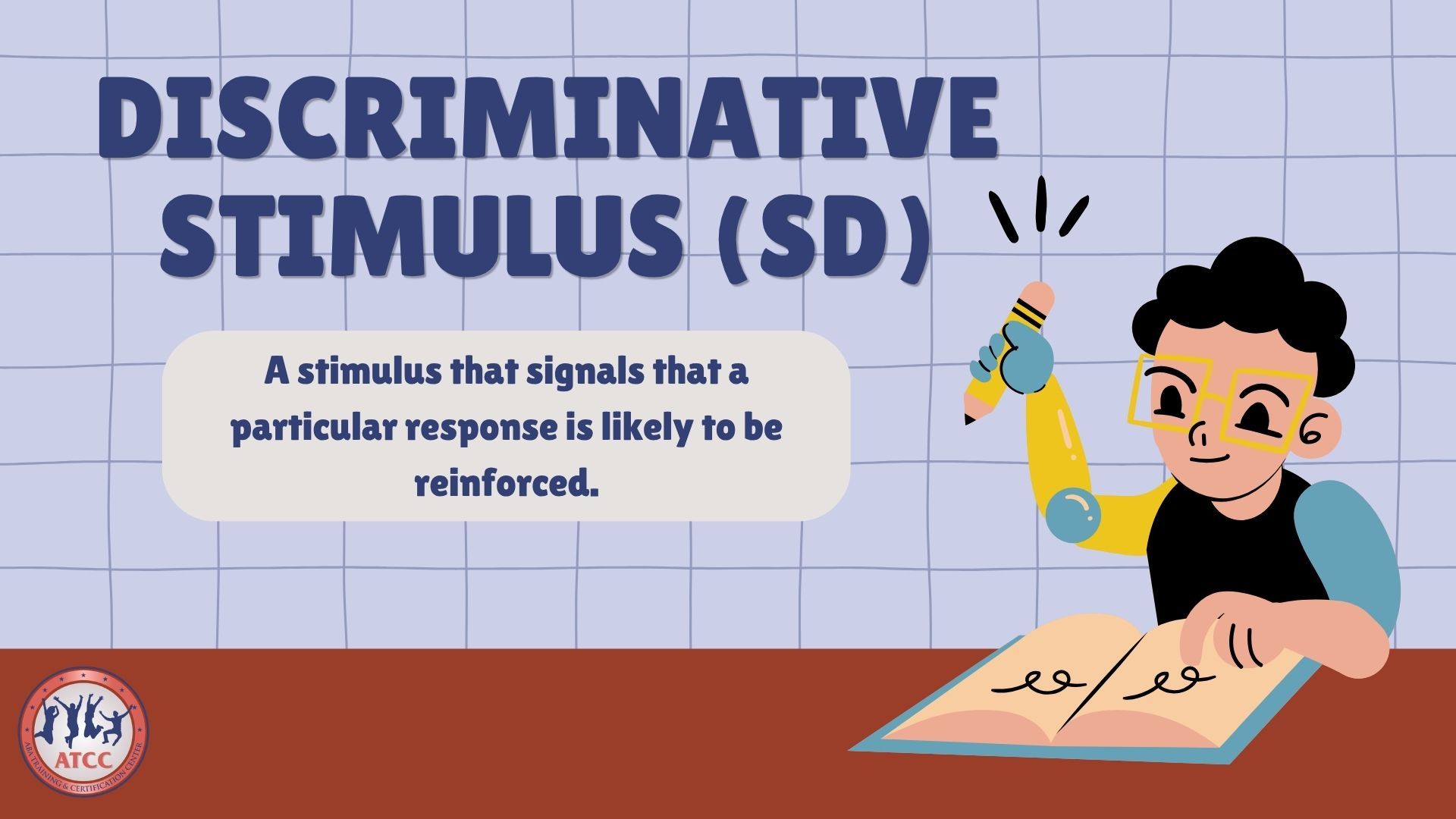
A discriminative stimulus, or SD, is a stimulus that signals that a particular response is likely to be reinforced.
Example: The RBT says, “Please put your toys away.” When the learner cleans up the toys, the RBT says, “Way to go, cleaning up!” The instruction, “Please put your toys away,” is the SD because it signals that cleaning up will result in reinforcement.
Easy way to remember:
SD = A signal to respond.
Description:
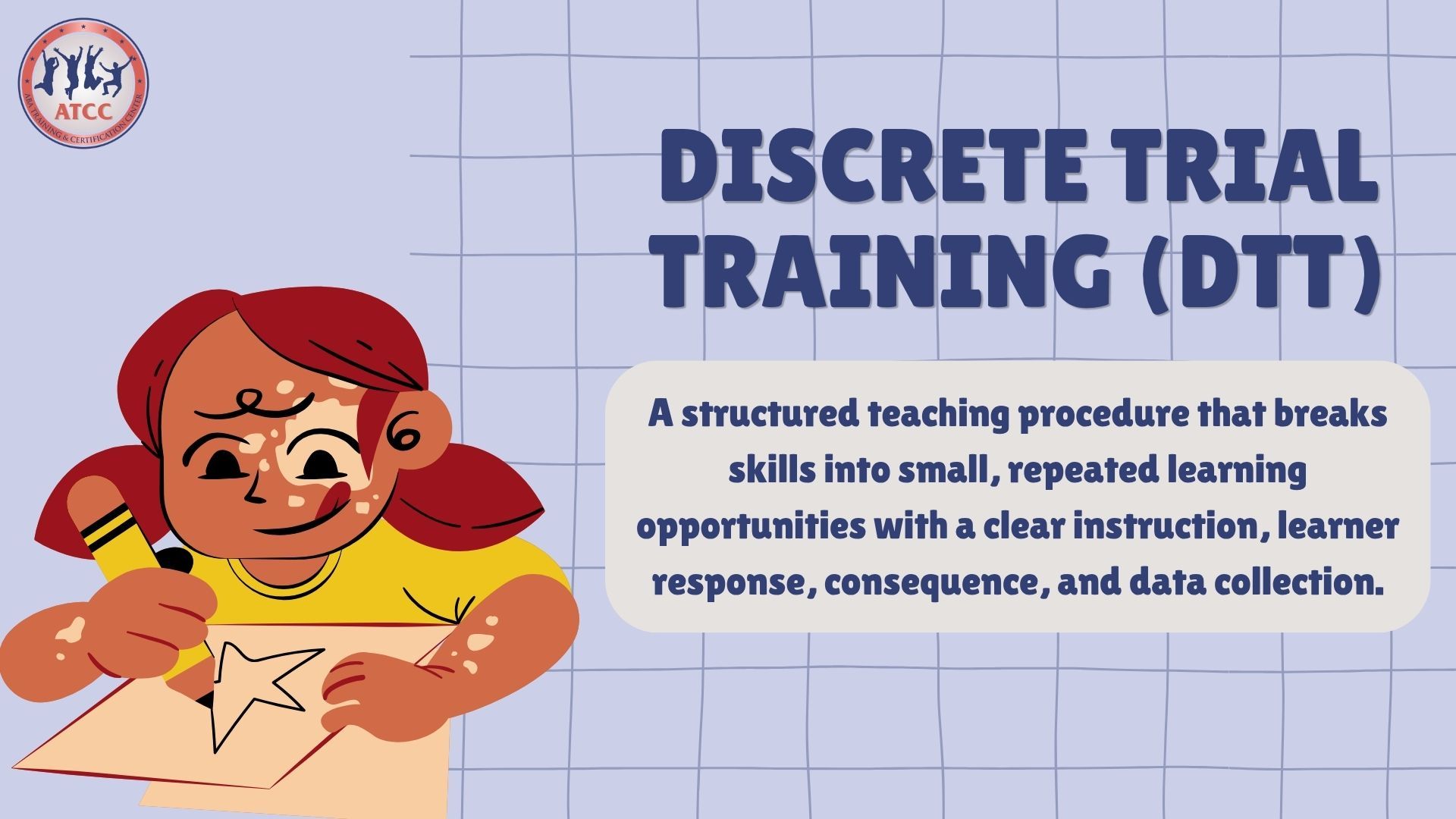
Discrete Trial Training is a structured teaching method that breaks skills into small, individual learning opportunities.
Example: The RBT says, “Put the block in the toy bin.” The learner puts the block in the toy bin, and the RBT says, “Way to go, cleaning up!” This is one structured teaching trial with an instruction, a response, and a consequence.
Easy way to remember:
DTT = One instruction, one response, one consequence.
Description:
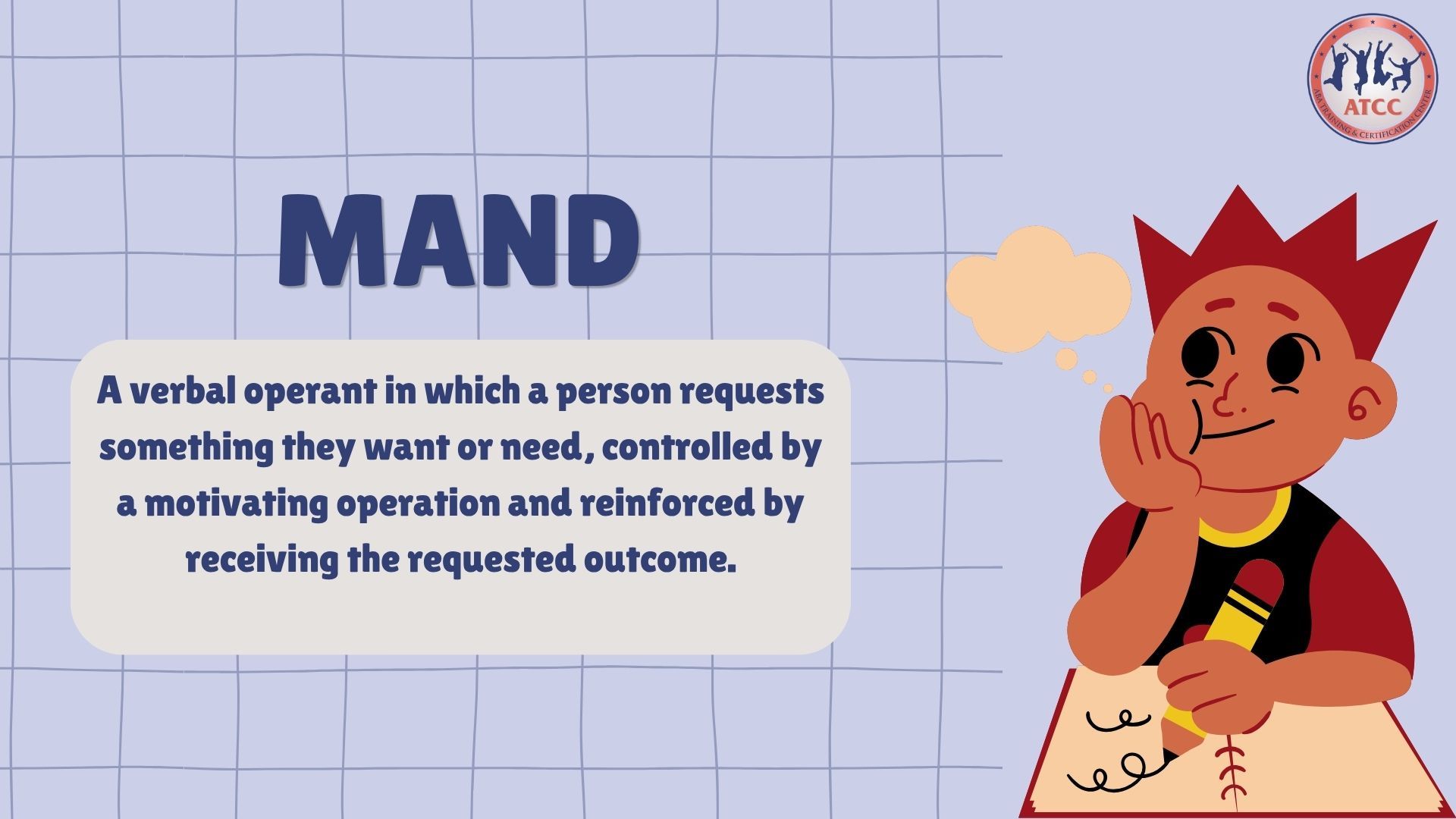
A mand is a verbal operant in which a person requests something they want or need.
Example:
A learner is thirsty and says, “Water.”
Easy way to remember:
Mand = Request.
Description:
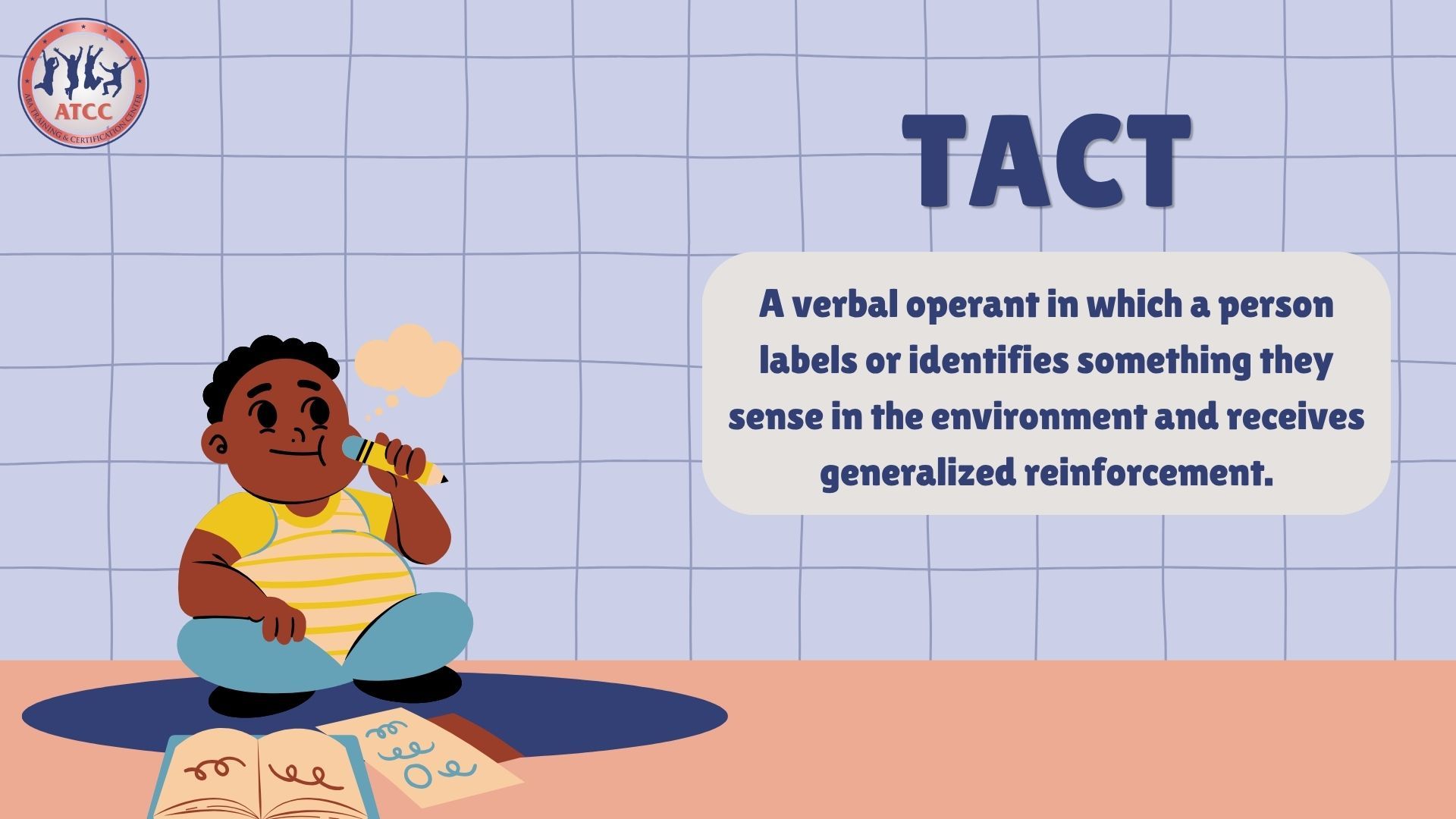
A tact is a verbal operant in which a person labels or identifies something they experience in their environment.
Example:
A learner sees a dog and says, “Dog.”
Easy way to remember:
Tact = Label.
BONUS - Additional 25 ABA Terms Every Future RBT® Should Know
Extinction
A procedure in which reinforcement that previously maintained a behavior is discontinued, resulting in a decrease in that behavior over time.
Shaping
Reinforcing successive approximations of a target behavior until the desired behavior is achieved.
Chaining
A teaching procedure used to establish a sequence of responses in which each response produces a stimulus that serves as a cue for the next response in the sequence.
Task Analysis
Breaking a complex skill or behavior into smaller, teachable steps.
Generalization
The occurrence of a learned behavior across people, settings, stimuli, responses, or situations that were not specifically used during teaching.
Maintenance
The continued performance of a previously learned behavior after teaching, intervention, or reinforcement has been reduced or ended.
Stimulus Control
A condition in which a behavior occurs more frequently in the presence of a particular antecedent stimulus because that behavior has been reinforced in its presence in the past.
Discrimination Training
A procedure in which a response is reinforced in the presence of one stimulus and not reinforced, or reinforced differently, in the presence of another stimulus.
Motivating Operation (MO)
An environmental event or condition that temporarily changes the effectiveness of a consequence as a reinforcer or punisher and changes the current frequency of behavior associated with that consequence.
Establishing Operation (EO)
A motivating operation that temporarily increases the effectiveness of a stimulus as a reinforcer or punisher and increases behavior that has previously resulted in that consequence.
Abolishing Operation (AO)
A motivating operation that temporarily decreases the effectiveness of a stimulus as a reinforcer or punisher and decreases behavior that has previously resulted in that consequence.
Positive Reinforcement
A stimulus is added following a behavior, and the future frequency of that behavior increases.
Negative Reinforcement
A stimulus is removed, reduced, postponed, or avoided following a behavior, and the future frequency of that behavior increases.
Punishment
A consequence that decreases the future frequency of a behavior.
Positive Punishment
A stimulus is added following a behavior, resulting in a decrease in the future frequency of that behavior.
Negative Punishment
A stimulus is removed following a behavior, resulting in a decrease in the future frequency of that behavior.
Differential Reinforcement
Reinforcing one response or class of responses while withholding reinforcement for another response or class of responses.
Functional Communication Training (FCT)
A differential reinforcement procedure in which an appropriate communication response is taught to access the same or similar reinforcer that maintains problem behavior.
Preference Assessment
A systematic procedure used to identify stimuli, activities, or events that an individual prefers and that may potentially function as reinforcers.
Functional Behavior Assessment (FBA)
A systematic process used to gather information about the variables associated with behavior in order to develop hypotheses about its function.
Functional Analysis
An experimental assessment in which environmental variables are systematically manipulated to determine their effect on behavior and identify the variables maintaining that behavior.
Reinforcer
A stimulus change that, when delivered or removed contingent on a behavior, increases the future frequency of that behavior.
Token Economy
A reinforcement system in which conditioned reinforcers, called tokens, are earned for specified behaviors and later exchanged for backup reinforcers.
Prompt Fading
The systematic reduction or removal of prompts so that a behavior comes under the control of the naturally occurring or intended stimulus.
Operational Definition
An objective, clear, and measurable description of a behavior that specifies exactly what counts and, when necessary, what does not count as the behavior.
Guaranteed Security using one of the most advanced encrypted systems on the market.
The information in this page is being processed and encrypted securely using industry-leading encryption and fraud prevention tools.
Thank you!
Free $1000+ Exam Bundle with RBT® Training
Complete the 40-hour RBT® Training Course with ATCC®, and the $1000+ Exam Bundle is automatically added to your dashboard at no extra cost.
1-WEEK-50-OFF
Today Only: 50% Off Your First Week of RBT® Training. Enter code 1-WEEK-50-OFF at checkout!
Free $1000+ Exam Bundle with RBT® Training
Complete the 40-hour RBT® Training Course with ATCC®, and the $1000+ Exam Bundle is automatically added to your dashboard at no extra cost.
Before you go
Get free RBT® resources and career tips from ATCC®.
Join the ATCC® Member Club and we’ll send practical tools for choosing an RBT® training, exam prep, and starting your career in ABA.
Thank you!
Login or sign up to ATCCLogin to ATCC
Start learning
or
Join the Community at ABA Training & Certification Center® for free!