RBT® Training Options
✅ 87.2% first-time pass rate on the RBT® board examination!
💬 AI-powered practice support!
But in ABA, data collection is not “extra paperwork.” It’s one of the most important parts of your job.
Why? Because data helps the team answer the question that matters most: Is the client making progress?
Without data, we’re guessing. With data, we can make informed, ethical, and effective decisions that truly help the client.
In simple terms, data collection means recording what happened during a session in a clear, objective way.
That can include things like:
- How many times a behavior happened
- How long a behavior lasted
- How quickly a client responded
- How many correct responses the client gave
- Whether a skill happened during a certain time period
Instead of saying, “He did better today,” data allows you to say:
- “He followed 8 out of 10 instructions independently.”
- “Tantrum duration decreased from 12 minutes to 4 minutes.”
- “She requested help independently 6 times today.”
That’s the difference between an opinion and measurable progress.
Why Data Collection Matters So Much
1) Data shows whether treatment is working
ABA is based on evidence. If the team is using a behavior plan or teaching program, data helps the BCBA® determine whether that plan is actually helping.
For example:
- If aggression is decreasing, the current intervention may be effective.
- If problem behavior is increasing, the plan may need to be adjusted.
- If a client has mastered a skill, it may be time to move to the next target.
Without reliable data, those decisions become much harder—and less accurate.
2) Data protects the client
Good data collection helps make sure clients are receiving support that is based on what they actually need, not just what someone thinks is happening.
This is especially important when:
- A client’s behavior changes suddenly
- Multiple staff work with the same client
- A family or school team wants updates
- The BCBA® is reviewing progress and making clinical decisions
- When data is clear and consistent, the client gets better support.
3) Data helps everyone stay on the same page
As a new RBT®, you may work with:
- BCBAs®
- Other RBTs®
- Parents/caregivers
- Teachers
- Clinic staff
Each person may describe behavior differently in everyday language. Data helps replace vague labels with clear information. That means the whole team can communicate more accurately and work together more effectively.
4) Data helps you become a stronger RBT®
New RBTs® sometimes feel nervous about data collection at first—and that’s normal.
The more you practice, the more confident you become in:
- Observing behavior objectively
- Recording what happened (not your interpretation)
- Following behavior plans correctly
- Noticing patterns over time
- Communicating clearly with your supervisor
In other words, strong data skills help you grow into a stronger, more professional technician.
Common Types of ABA Data
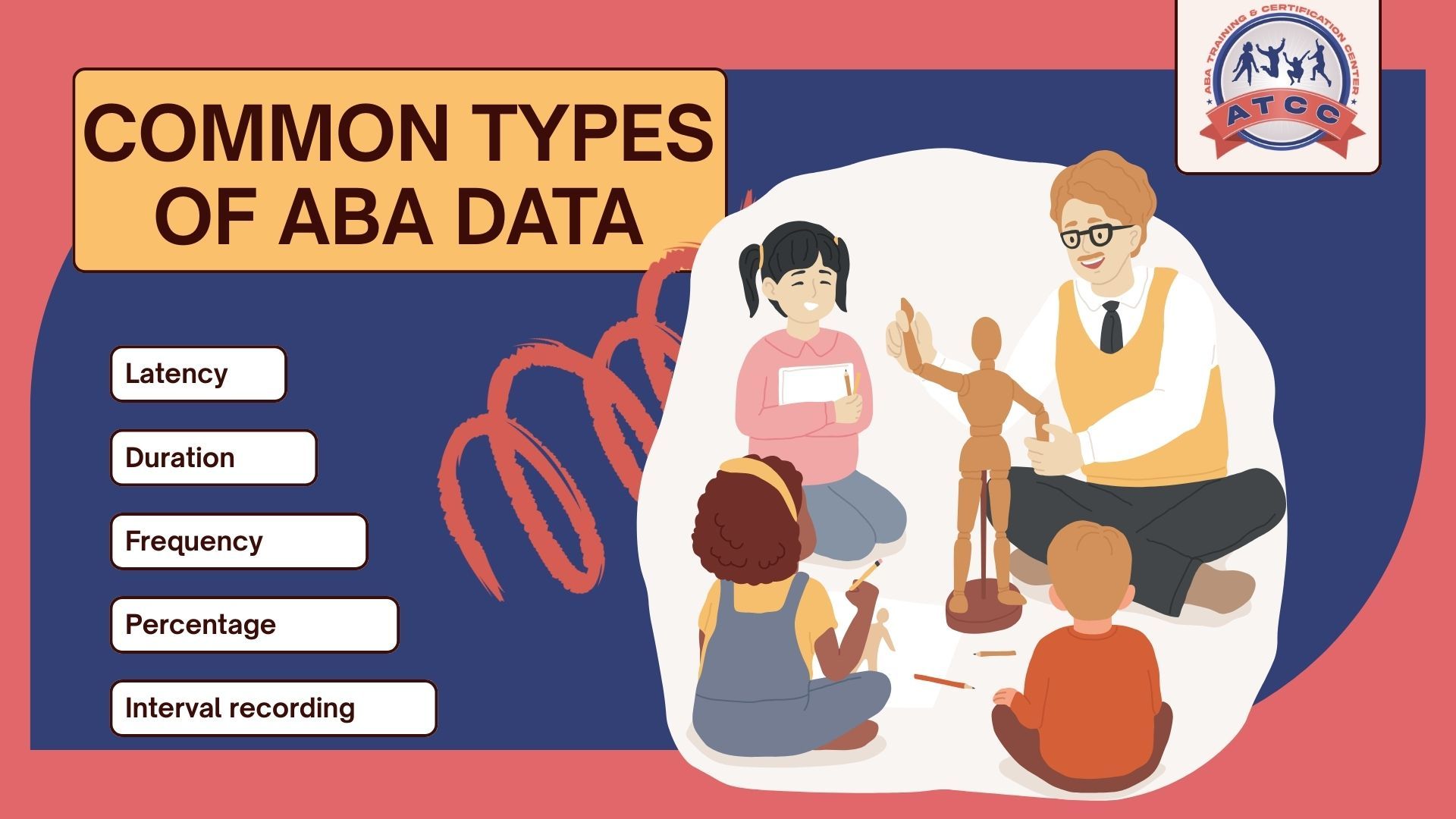
- Frequency: How many times a behavior happened. Example: The client hit the table 4 times.
- Duration: How long the behavior lasted. Example: Tantrum lasted 3 minutes and 20 seconds.
- Latency: How long it took for the behavior to start after a direction or cue. Example: Client started the task 10 seconds after instruction.
- Percentage: How many correct responses out of total opportunities. Example: 8 correct out of 10 trials = 80%.
- Interval recording: Whether the behavior happened during a set time block. Example: Behavior occurred in 3 out of 10 intervals.
You do not have to memorize everything at once. Your BCBA® will guide you on which method to use for each target.
Tips for New RBTs® to Improve Data Collection Right Away
Keep Learning with ATCC®