The BACB®’s 2026 RBT® 40-Hour Training Curriculum includes elementary verbal operants such as mand, tact, echoic, and intraverbal, making this an important concept for future RBT®s to understand.
What Are Verbal Operants?
Each one is identified by what controls the response. For example, a child saying “cookie” can mean different things depending on the situation. If the child says “cookie” because they want one, that is a mand. If the child says “cookie” because they see a cookie, that is a tact. If the child says “cookie” after someone asks, “What do you eat for dessert?” that is an intraverbal.
Same word, different function.
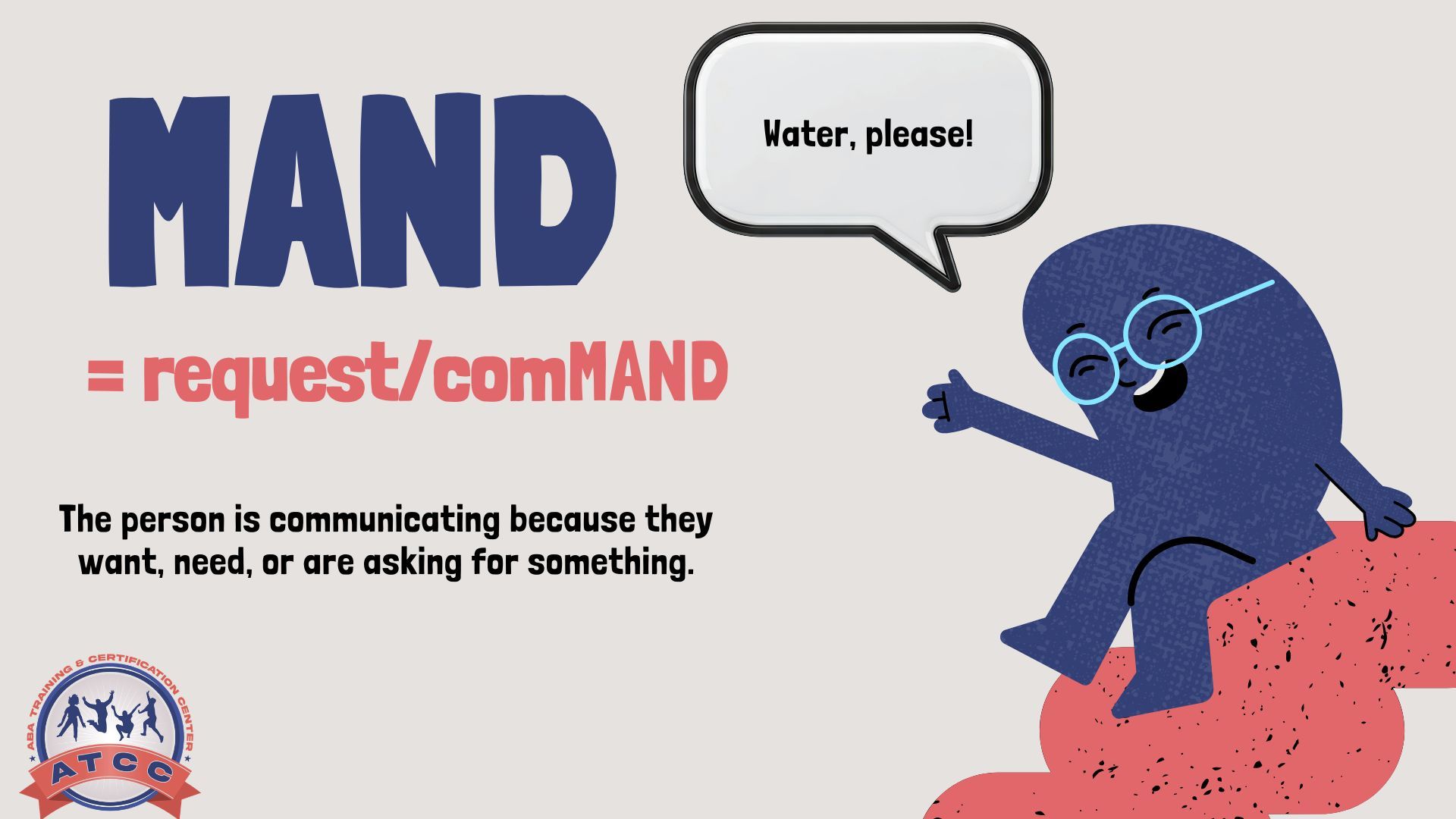
A mand is a request. It happens when someone wants or needs something and uses communication to ask for it.
Example:
A child smells their mother’s freshly baked cookies and says, “Cookie, please.”
This is a mand because the child wants the cookie and is requesting it.
Mands are important because they help clients communicate their needs instead of relying on crying, grabbing, or challenging behavior. For RBTs, mand training often happens during natural moments when motivation is present.
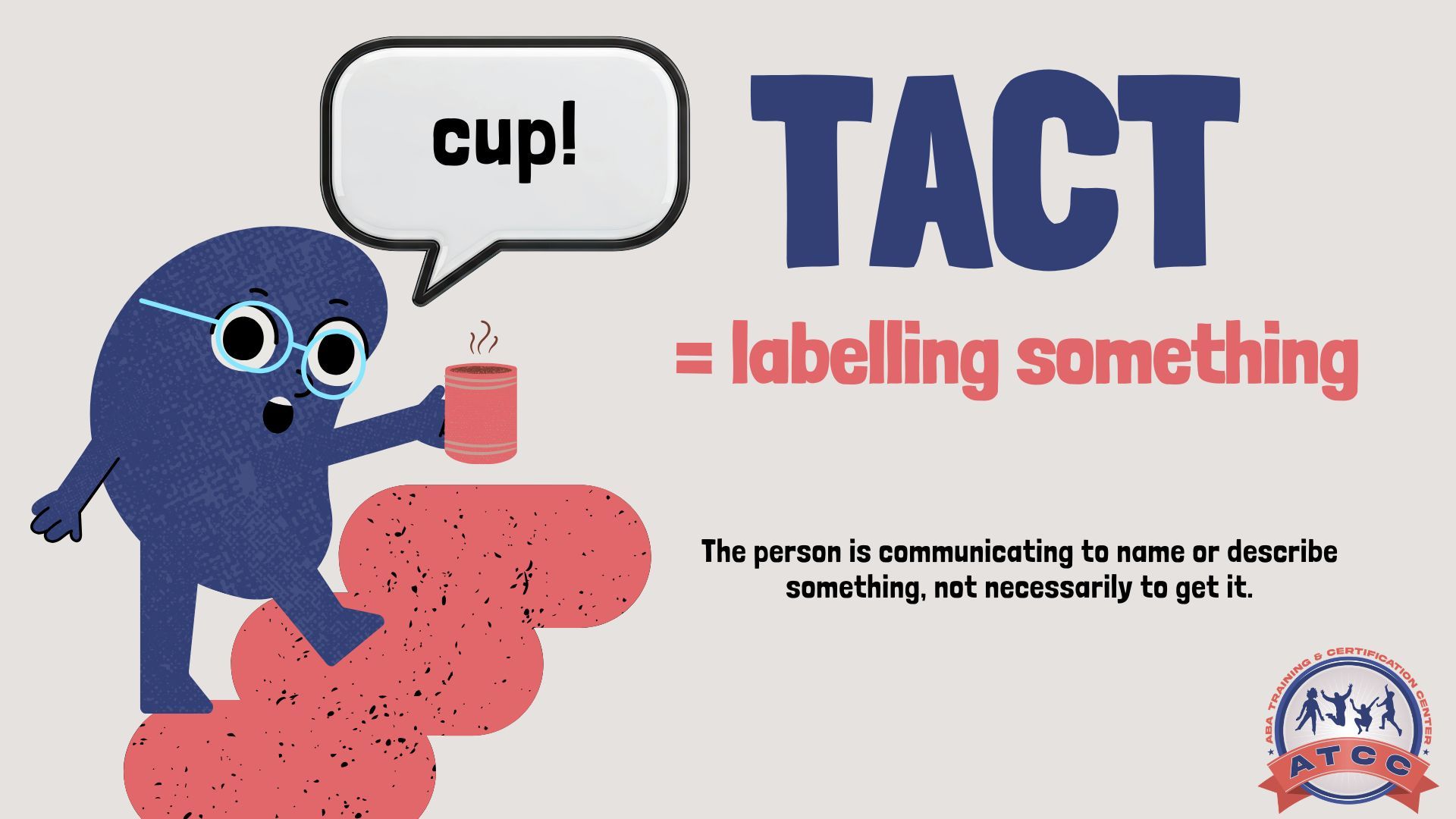
A tact is labeling something in the environment.
Example:
A child walks into the kitchen, smells the cookies, sees them on the counter, and says, “Cookies!”
This is a tact because the child is labeling something they notice.
Tacts help clients build vocabulary and describe the world around them. RBTs may teach tacts by using pictures, objects, sounds, smells, or real-life situations.
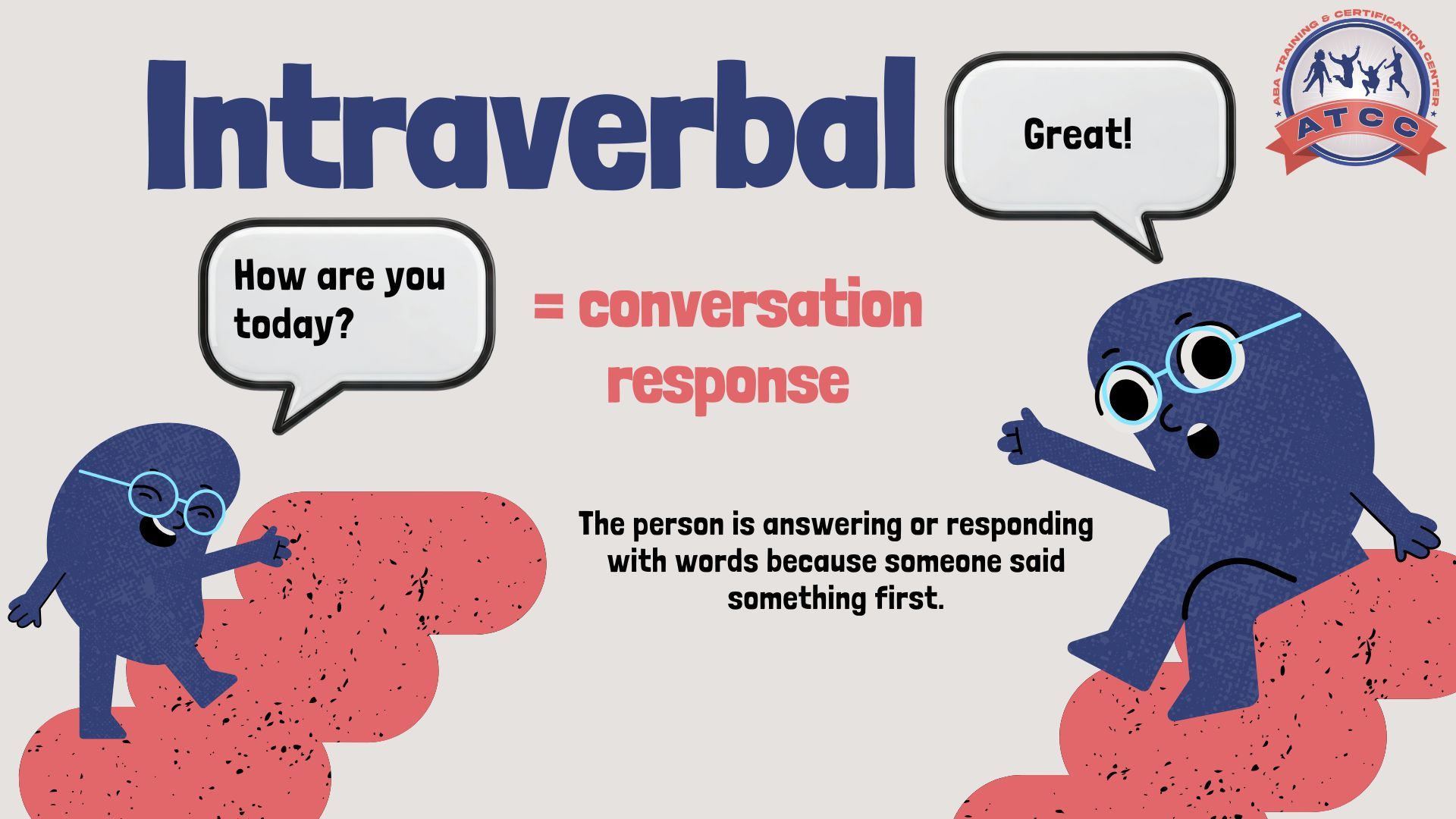
An intraverbal happens when a person responds to someone else’s words, but the answer is not directly copied.
Example:
The RBT asks, “How are you today?”
The child answers, “Great!
This is an intraverbal because the child is answering a question. The response is controlled by the RBT’s words, not simply by repeating or directly reading something.
Intraverbals are important for conversation, answering questions, social interaction, and everyday communication.
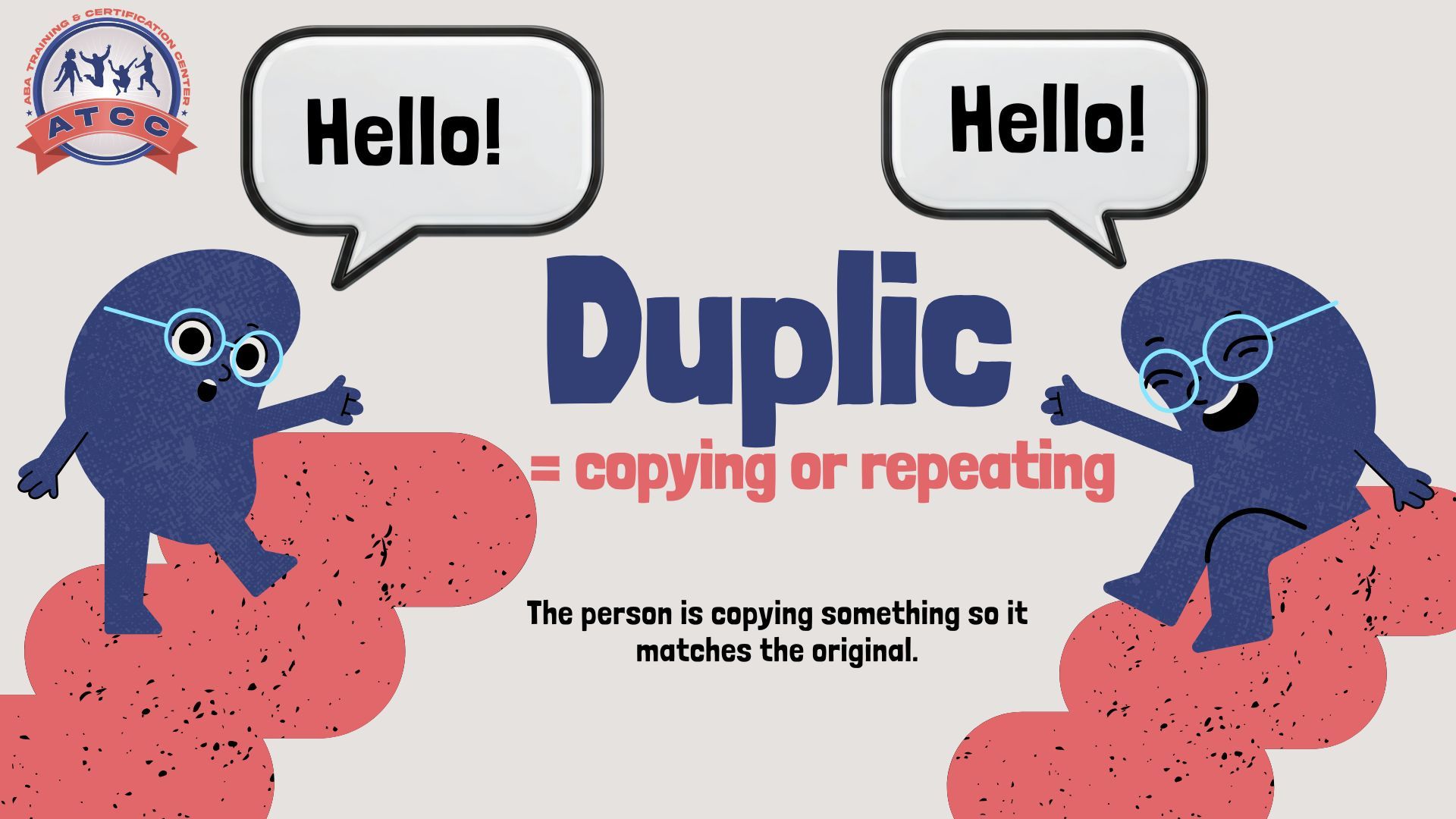
A duplic is a broader verbal behavior category where the response matches the same form as the model. Echoic behavior is one common example of a duplic because spoken words are copied with spoken words.
Example:
RBT says, “Hello!.”
Child says, “Hello!”
The child is copying the same spoken form, so this can be understood as a duplic.
For RBT training, students usually focus more on the practical term echoic, but understanding duplic can help learners see how verbal behavior is grouped in more advanced ABA discussions.
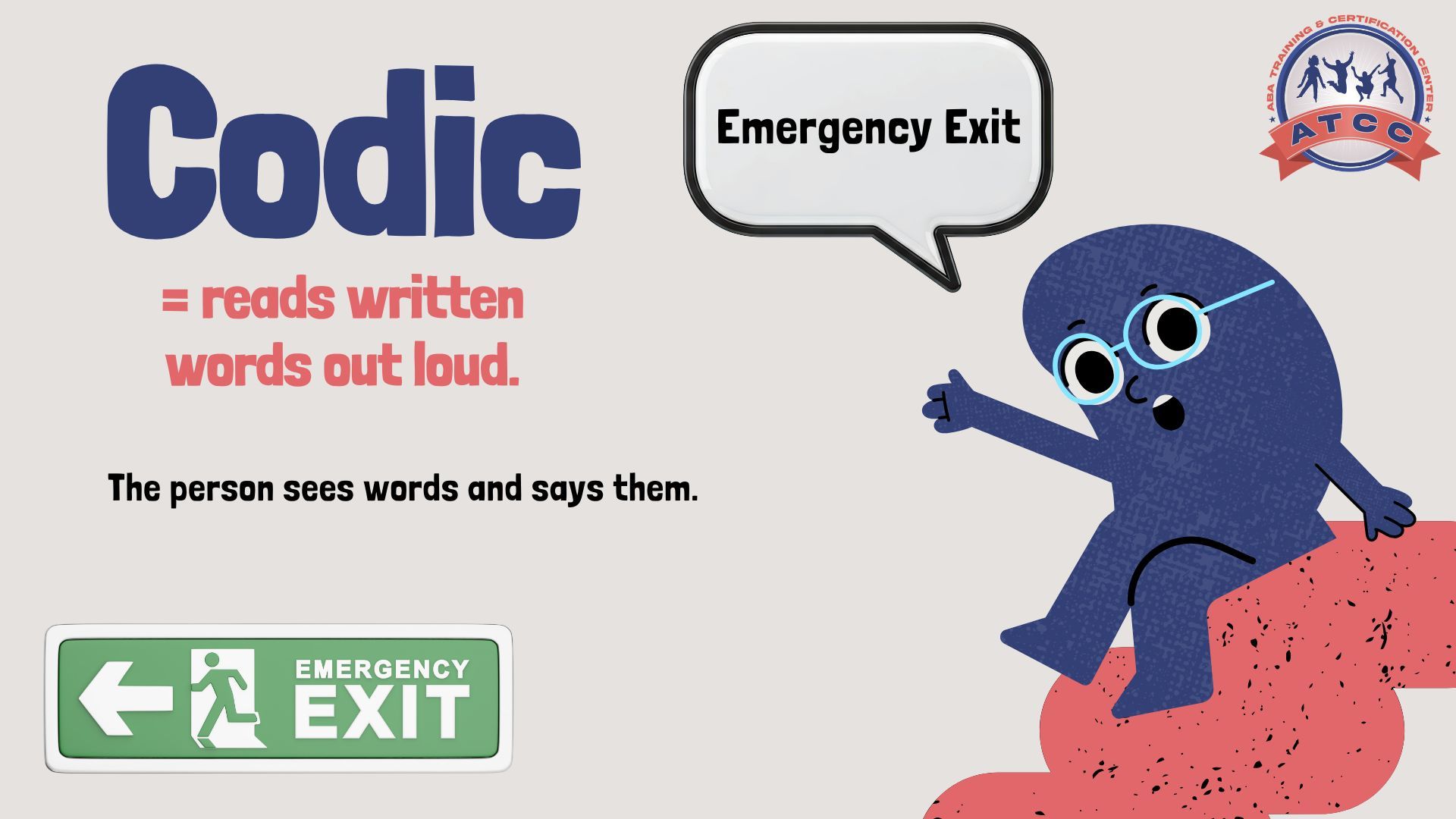
A codic happens when the person responds to verbal behavior in a different form, but the meaning stays the same
.The written word and spoken word match in meaning, but they are different forms. This is often discussed as textual behavior, or reading written words aloud.
✅ 87.2% first-time pass rate on the RBT® board examination!
💬 AI-powered practice support, built into every lesson!
YouTube:
In the realm of behavioral sciences, Applied Behavior Analysis (ABA) stands as a beacon of hope, offering transformative solutions for individuals with diverse needs. At the forefront of ABA education stands the ABA Training & Certification Center (ATCC), a pioneering institution committed to excellence in training and certification programs, particularly in the field of Registered Behavior Technician (RBT®) training.

1-877-770-2822
SUPPORT@ATCCONLINE.COM
AFFILIATE PROGRAM
CONTACT US