RBT® Training Options
✅ 87.2% first-time pass rate on the RBT® board examination!
💬 AI-powered practice support! Study smarter with interactive, on-demand guidance from the RBT® Exam Prep AI ChatBot that helps you review, quiz, and reinforce key concepts instantly.
But “in demand” doesn’t automatically mean “right for everyone.” This blog breaks down the salary, benefits, why the role stays in demand, what the workforce shortage really means, and how to decide if it’s worth it for you in 2026—plus a few important updates on the RBT® 2026 training requirements. (Behavior Analyst Certification Board)
What is an RBT® (and why it’s a smart entry-level career)?
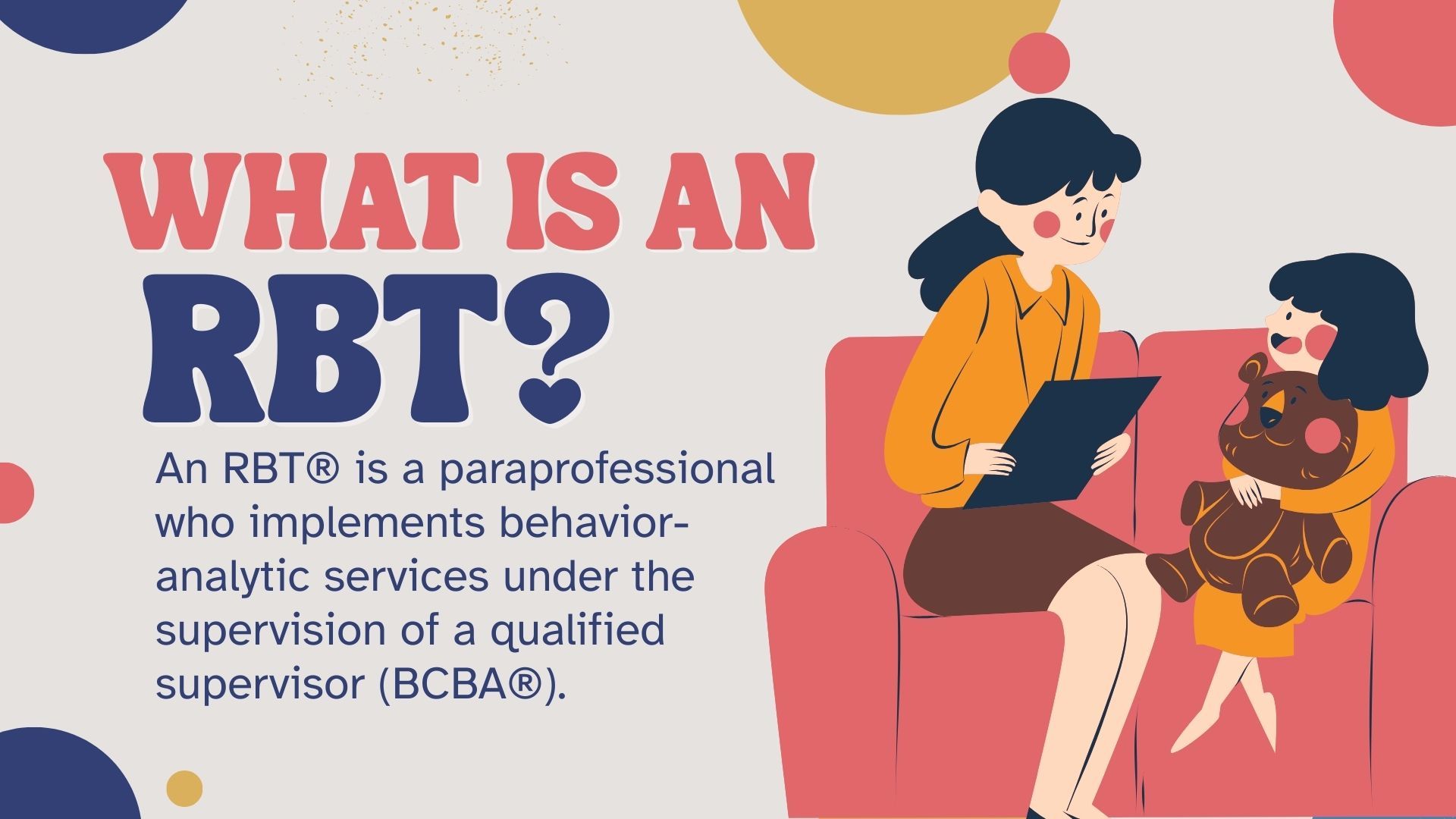
An RBT® is a paraprofessional who implements behavior-analytic services under the supervision of a qualified supervisor (typically a BCBA®). In real life, that usually means working 1:1 (or small group) with a client to teach skills, reduce challenging behaviors, and collect data that supports a treatment plan.
For many people, RBT® work is a strong “first step” because it provides:
- Hands-on clinical experience
- A clear path to growth (Lead RBT®, trainer, case manager, BCaBA®, BCBA® track)
- Transferable skills (behavior principles, communication, teaching strategies, professionalism)
2026 RBT® Updates: New Training Rules, Same Achievable Goal
If you apply for RBT® certification on or after January 1, 2026, your 40-hour training must meet the BACB’s RBT 2026 40-Hour Training Requirements and Curriculum Outline, including updated documentation and certificate wording. (Behavior Analyst Certification Board®)
What this means for you:
Make sure the training you choose is explicitly aligned with the RBT 2026 requirements—not older versions—so you don’t waste time completing a course that won’t be accepted for certification after the change date. (Behavior Analyst Certification Board®)
Benefits: The Rewards That Keep RBT®s Motivated
Many RBT® jobs offer benefits that make the role attractive—especially for career starters:
- Paid training / onboarding (common with larger providers)
- Health benefits and paid time off (varies by employer and full-time status)
- Tuition support or career pathways toward BCBA® roles (varies)
- A mission-driven job where your work has visible impact
A lot of big providers actively recruit for entry-level BT/RBT® roles and emphasize training + advancement. Examples include:
RBT® Demand Explained: The Insurance Factor
Here’s the simple version:
- More children are being identified with autism. CDC surveillance data continues to show rising prevalence among children (for example, about 1 in 31 8-year-old children identified with ASD in 2022 in ADDM sites). (cdc.gov)
- Insurance coverage expanded access to ABA services. A major reason RBT® demand stays high is that ABA services are often funded through commercial insurance and Medicaid, which increases the number of families who can pursue services (and the number of service hours authorized). (NCBI)
- ABA service models require a lot of technician hours. Even one client may receive multiple sessions per week, which creates steady hiring needs—especially as companies grow.
Employment Outlook: Why RBT® Opportunities Remain High (and Why It Matters)
You’ll often see ABA providers hiring year-round:
True demand growth: The field has expanded rapidly over the last decade, and the BACB’s data show large numbers of certificants in the pipeline, including strong growth in the number of RBT® certificants. (Behavior Analyst Certification Board®)
Bottom line: high demand can be a great opportunity—but it also means you should choose your employer carefully.
The “ratio” question: kids on the spectrum vs. RBTs®
People often ask, “Are there enough RBTs® to serve the need?”
Here’s one way to look at it using public estimates:
- The National Survey of Children’s Health (NSCH) estimates about 2,236,772 children ages 3–17 in the U.S. are diagnosed with ASD (2022 estimate shown in the NSCH table). (NCSH Data)
- The BACB reports 232,792 RBT certificants as of October 1, 2025. (Behavior Analyst Certification Board®)
That works out to roughly ~9.6 children with ASD per 1 RBT® (very rough context, not a staffing rule).
Why it’s not a perfect ratio:
- RBTs® serve clients with diagnoses beyond autism, too
- One client may require many hours per week
- One RBT® can serve multiple clients (or only one, depending on scheduling)
Why 2026 Is a Strong Time to Start an RBT® Career
Becoming an RBT® in 2026 is often worth it if you want:
- A fast entry point into healthcare/education/behavioral services
- A job where you learn real clinical skills (not just theory)
- A career ladder toward BCaBA®/BCBA® or related roles (SLP, OT, special education, counseling)
- Work that genuinely matters to families
- Choose a compliant RBT 2026-aligned training path
- Pick an employer with real training + support
- Treat the role as a skill-building career step, not just a job
What’s the First Step?
ATCC® – A ready environment is a ready learner
1-877-770-2822
SUPPORT@ATCCONLINE.COM
AFFILIATE PROGRAM
CONTACT US